
I never expected tea to change my skin. But after about six weeks of drinking chamomile every evening (for sleep, not skin — that was the original goal), a friend asked what I’d changed in my skincare routine. The redness along my jawline that had been a constant companion for years had noticeably faded. I hadn’t changed any products. The only new variable was the chamomile.
That anecdote isn’t evidence — I know that. But it sent me looking into the actual research on chamomile and skin health, and there’s more substance there than I expected.
The Compounds That Matter for Skin
Bisabolol is chamomile’s key skin-active compound. It’s a naturally occurring alcohol with potent anti-inflammatory and skin-soothing properties. Bisabolol is so effective that it’s used as an active ingredient in many commercial skincare products (often listed as alpha-bisabolol). Chamomile is one of its richest natural sources.
Apigenin — the same flavonoid that makes chamomile helpful for anxiety and sleep — also has demonstrated anti-inflammatory effects on skin. A study in the Journal of Drugs in Dermatology found that apigenin reduced UV-induced inflammation and skin damage in cell studies.
Chamazulene is formed during steam distillation of chamomile and gives chamomile essential oil its distinctive blue color. It’s a powerful anti-inflammatory that reduces redness and irritation. While it’s more concentrated in chamomile essential oil than in tea, some does make it into a well-steeped cup.
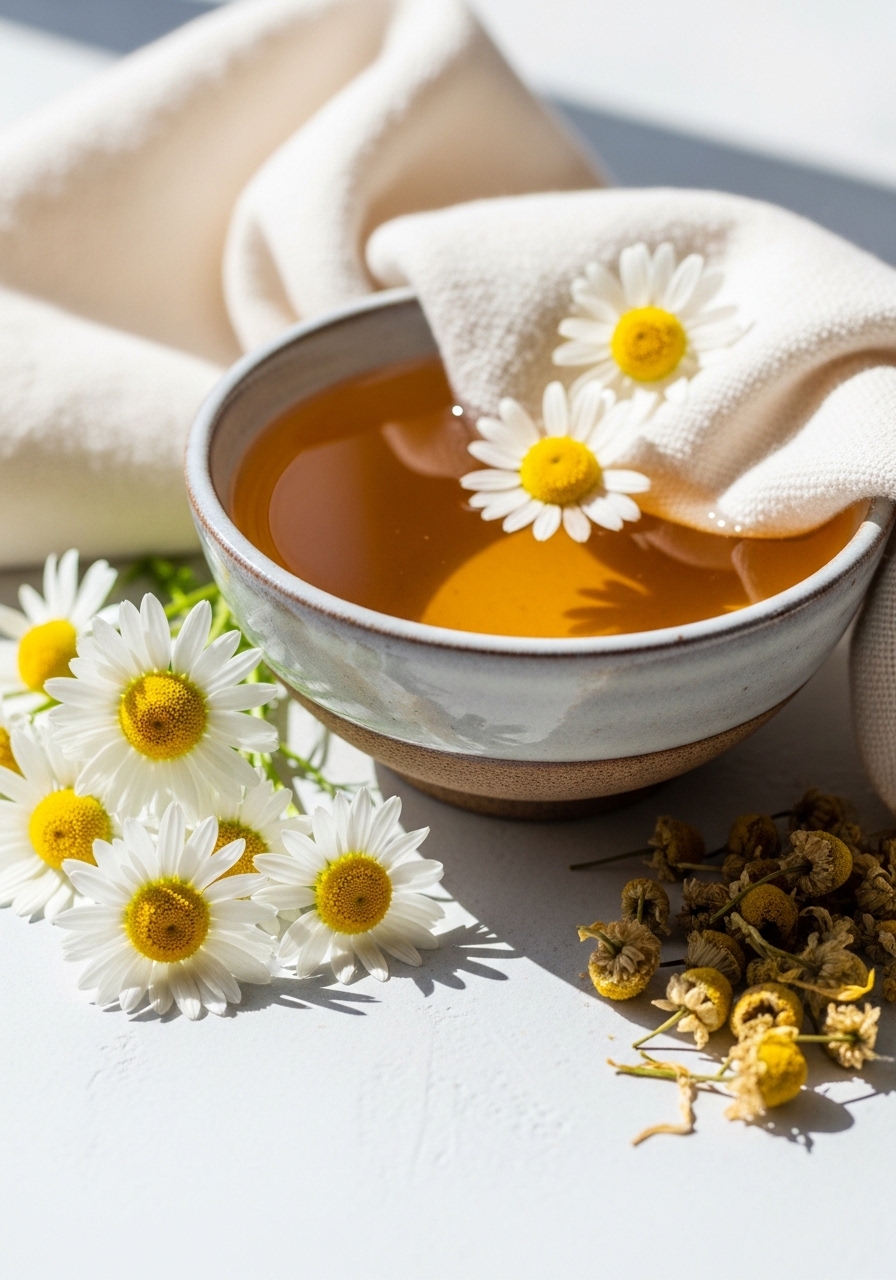
What Drinking Chamomile Can Do for Skin
Reduce systemic inflammation. Many skin conditions — acne, rosacea, eczema, psoriasis — have an inflammatory component. By reducing overall inflammation through regular chamomile consumption, you may see indirect improvements in inflammatory skin conditions. This isn’t a quick fix — it takes weeks of consistent consumption, and the effect is subtle.
Improve sleep quality. This might be chamomile’s biggest contribution to skin health, and it’s indirect. Poor sleep increases cortisol levels, which triggers inflammation, oil production, and collagen breakdown. By improving your sleep, chamomile supports the skin repair and regeneration that happens during deep sleep.
Antioxidant protection. The polyphenols in chamomile help neutralize free radicals that contribute to premature skin aging. Oxidative stress from UV exposure, pollution, and normal metabolism damages collagen and elastin. Regular antioxidant intake — from tea and other dietary sources — provides some internal defense.
Stress reduction. Chronic stress visibly affects skin — it can trigger acne breakouts, exacerbate eczema, and accelerate aging. Chamomile’s anxiolytic effects, if they help you manage stress, indirectly support healthier skin.
Topical Uses (Where the Evidence Is Stronger)
The evidence for topical chamomile on skin is actually more direct than for drinking it. Here are methods with research support:
Cold chamomile compress for puffy or irritated skin:
- Brew a strong cup of chamomile (2 bags or 2 tablespoons loose flowers, steeped 10 minutes)
- Let it cool completely, then refrigerate for 30 minutes
- Soak a clean cotton cloth in the cold tea
- Apply to affected areas for 10-15 minutes
This works well for general facial redness, puffy eyes, minor sunburn, and irritated patches. The combination of cold temperature, bisabolol, and chamomile’s anti-inflammatory compounds provides noticeable relief.
Chamomile tea as a toner: Brew chamomile, cool it, and apply with a cotton pad after cleansing. It’s gentle enough for sensitive skin and provides mild toning and anti-inflammatory benefits. I wouldn’t expect dramatic results, but it’s a natural and cost-effective addition to a skincare routine.
Chamomile steam for pores: Brew a large bowl of strong chamomile tea, drape a towel over your head, and steam your face for 5-10 minutes. The warmth opens pores while the chamomile compounds soothe inflammation. Follow with your regular cleanser for deeper cleaning.
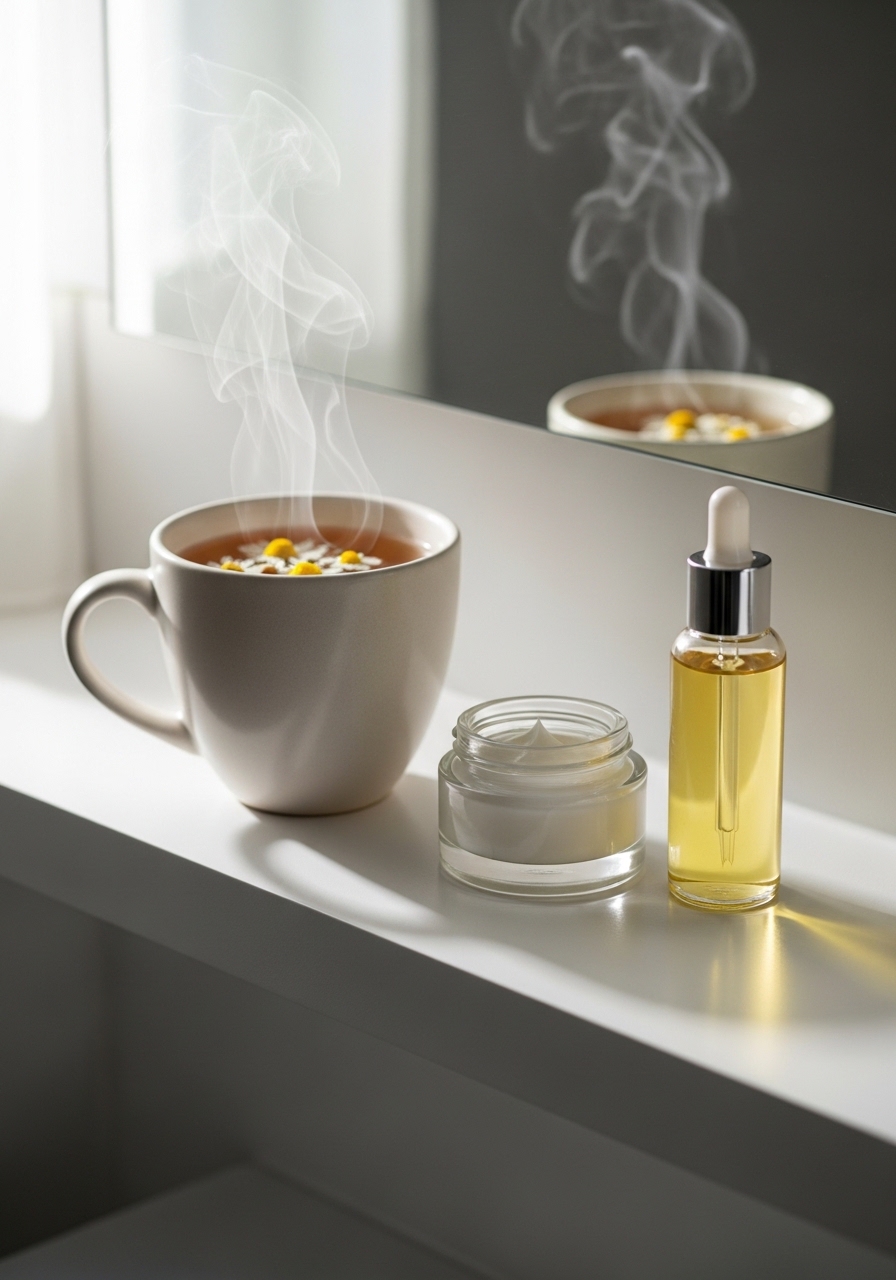
What Chamomile Won’t Do for Skin
Chamomile isn’t a treatment for serious skin conditions. If you have moderate-to-severe acne, diagnosed rosacea, or active eczema flares, you need dermatological treatment — not just tea. Chamomile can be a supportive addition alongside medical treatment, but it shouldn’t replace it.
It also won’t reverse significant sun damage, deep wrinkles, or hyperpigmentation. These require targeted treatments (retinoids, vitamin C serums, chemical exfoliants, or professional procedures). Chamomile’s antioxidant effects are preventive, not corrective. Chamomile is also only one of several teas worth drinking for skin — our guide to tea for better skin compares them.
FAQ
How long until I see skin benefits from drinking chamomile tea?
If you’re going to notice a difference from drinking it, expect 4-8 weeks of consistent daily consumption. The anti-inflammatory effects need to build up, and skin cell turnover takes roughly 28 days. Don’t expect overnight changes.
Can chamomile tea cause skin reactions?
Rarely, but yes. People with ragweed allergies may have cross-reactions to chamomile, including contact dermatitis when applied topically. Always patch-test on a small area of your inner arm before applying chamomile tea to your face, especially if you have known plant allergies.
Is chamomile tea or chamomile essential oil better for skin?
Essential oil is more concentrated and potent for topical use, but it must be diluted in a carrier oil (never apply undiluted essential oil to skin). Chamomile tea is milder and safer for direct application. For drinking, obviously tea is the only option. Both have their place — tea for gentle daily use, diluted essential oil for targeted treatment of specific spots.
Which type of chamomile is best for skin?
German chamomile (Matricaria chamomilla) contains higher levels of bisabolol and chamazulene than Roman chamomile. For skin-specific benefits, look for German chamomile products. For drinking, either type works, though German chamomile is more commonly available as a tea.