I started drinking chamomile tea for anxiety about two years ago, mostly out of desperation. I’d been having those evenings where your brain just won’t stop cycling through every possible thing that could go wrong tomorrow — and I’d read enough about chamomile to think it was worth trying before reaching for anything stronger. What surprised me wasn’t that it helped (I half-expected a placebo effect), but how much it helped once I figured out the right way to brew it.
The short answer: chamomile tea does have real, clinically studied anxiolytic effects. But there’s a meaningful difference between a weak cup from a dusty tea bag and a properly brewed cup using quality flowers. Here’s what the research says and how I make mine.
What the Research Actually Shows
Chamomile isn’t just folk medicine. A 2016 clinical trial published in Phytomedicine followed 179 participants with generalized anxiety disorder over 38 weeks. The group taking chamomile extract experienced significantly greater reductions in anxiety symptoms compared to placebo — and importantly, the benefits held up over the long term, not just during the first few weeks.
An earlier trial from the University of Pennsylvania found that chamomile extract produced a meaningful reduction in anxiety scores compared to placebo in patients with mild to moderate GAD. The effect wasn’t as dramatic as prescription medication, but it was statistically significant and came with essentially no side effects.
The key compound appears to be apigenin, a flavonoid that binds to GABA receptors in the brain — the same receptors targeted by benzodiazepines like Valium, though with a much milder effect. Chamomile also contains other flavonoids and terpenoids that contribute to its calming properties.
Here’s what I find useful about this: knowing the mechanism means you can brew more effectively. Apigenin is released during steeping, and more contact time with hotter water extracts more of it.
How I Brew Chamomile for Anxiety
After a lot of trial and error, this is the method that works best for me. The difference between “generic chamomile tea” and this approach is night and day.
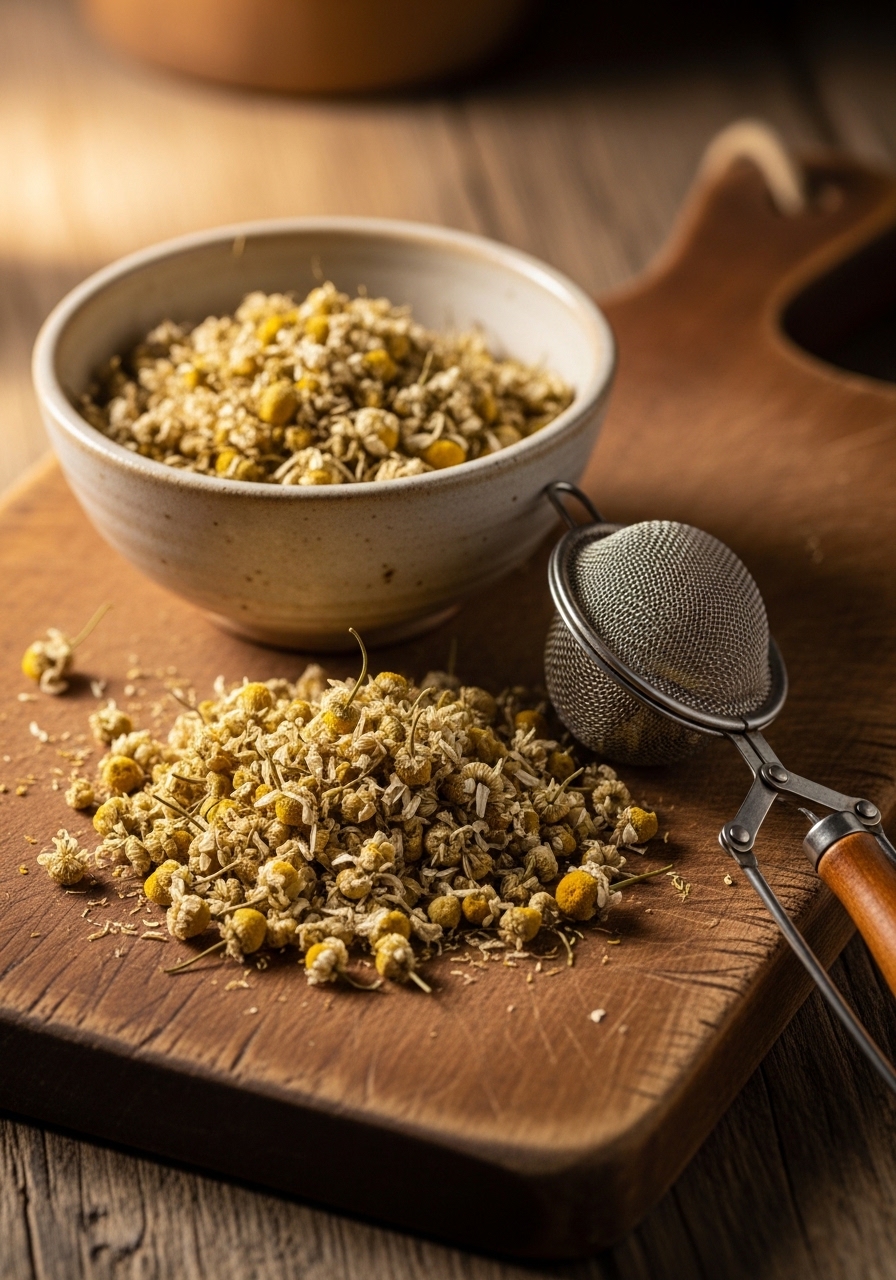
Use whole dried flowers, not tea bags. This is the single biggest upgrade you can make. Most tea bags contain chamomile dust — broken fragments that have lost much of their essential oils. Whole dried chamomile flowers have a distinctly sweet, apple-like aroma when fresh. If your chamomile smells like hay, it’s too old.
The ratio matters. I use about 1 heaping tablespoon of dried flowers per 8 oz cup. That’s roughly double what most packaging suggests. For anxiety specifically, you want a stronger brew — those clinical trials used concentrated extracts, so a weak cup isn’t going to do much.
Water temperature: just off the boil. Bring your water to a boil, then let it sit for about 30 seconds. You want roughly 200-205°F (93-96°C). Rolling boiling water can make the tea taste slightly bitter and may degrade some of the more delicate compounds.
Steep covered for 5-7 minutes. This is important — covering your cup or pot traps the essential oils that would otherwise evaporate with the steam. Those oils contain some of the most beneficial compounds. I use a small plate over my mug. If you like it stronger and don’t mind a slightly more bitter edge, 10 minutes extracts even more apigenin.
Optional additions that actually help:
- Honey — a spoonful adds sweetness and there’s some evidence that raw honey has mild anxiolytic properties of its own
- Lavender buds — a few dried buds steeped alongside chamomile amplifies the calming effect. Lavender shares some anti-inflammatory pathways with chamomile
- Lemon balm — another herb with clinical evidence for reducing anxiety and improving sleep quality
Building a Routine That Works
Here’s what I’ve found matters more than the perfect brewing technique: consistency. That long-term clinical trial I mentioned showed benefits building over weeks, not just from a single cup. My routine looks like this:
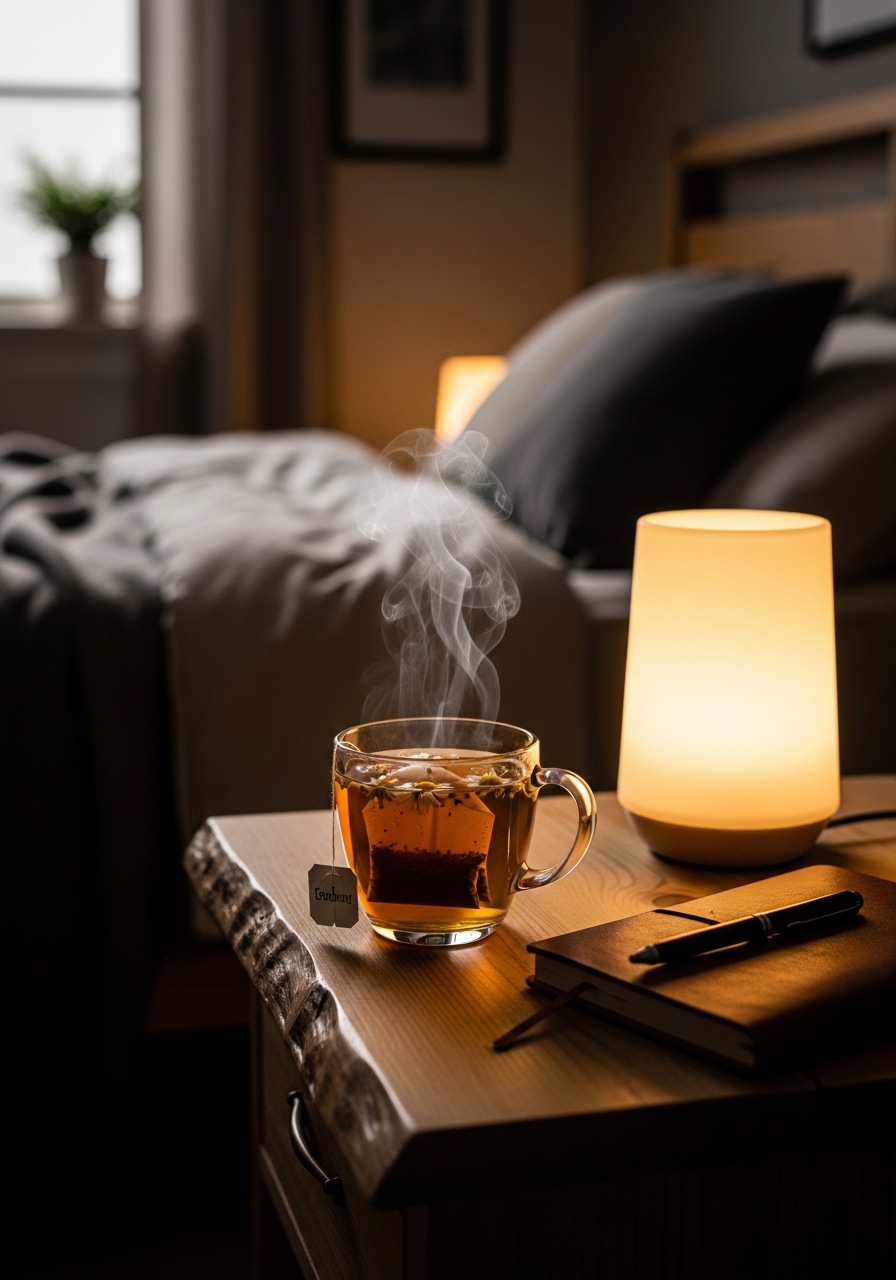
Evening wind-down cup (non-negotiable). About 60-90 minutes before bed, I brew a strong cup. This has become a signal to my brain that the day is wrapping up. The routine itself — boiling water, measuring flowers, waiting for it to steep — is a small act of deliberate slowing down that helps as much as the tea itself.
Afternoon cup when I need it. If I’m having a particularly anxious day — deadline pressure, too many meetings, whatever — I’ll brew a cup around 3pm. Since chamomile is caffeine-free, there’s no worry about it messing with sleep later. It’s a useful reset point in the day.
What I don’t do: I don’t treat it as emergency medicine. If you’re in the middle of a panic attack, a cup of tea isn’t the right intervention. Chamomile works best as a daily practice that gradually lowers your baseline anxiety level over time.
Where to Source Good Chamomile
Not all chamomile is equal. There are two main species — German chamomile (Matricaria chamomilla) and Roman chamomile (Chamaemelum nobile). German chamomile has significantly higher concentrations of apigenin and is what’s used in most clinical research. It’s also what you’ll find in most tea shops.
What to look for: whole, intact flower heads that are a faded yellow-gold color. They should smell distinctly sweet and slightly apple-like. Avoid anything that’s been reduced to powder or that has no aroma. I buy mine from bulk herb suppliers and keep them in an airtight jar away from light — they stay potent for about 6-8 months that way.
Budget option that still works: if you’re starting out and don’t want to invest in loose flowers yet, Traditional Medicinals Chamomile with Lavender is a tea bag brand that uses pharmacopeial-grade chamomile. It’s stronger than most grocery store brands. Use two bags per cup instead of one.
FAQ
How long does chamomile tea take to work for anxiety?
A single cup typically produces a mild calming effect within 30-45 minutes. But the real benefits come from regular use — the clinical trials showing significant anxiety reduction ran for 8 weeks or longer. Think of it as a daily practice rather than an as-needed remedy.
Can I drink chamomile tea every day?
Yes. Long-term studies have shown chamomile to be safe for daily use over many months. The one exception is if you’re allergic to plants in the daisy family (ragweed, chrysanthemums), as chamomile can trigger cross-reactions. Start with one cup daily and see how you feel. If it is seasonal allergies you are trying to treat rather than avoid, see which teas actually help with allergies.
Does chamomile tea interact with anxiety medications?
Chamomile has mild sedative properties and could theoretically enhance the effects of benzodiazepines or other sedating medications. If you’re taking prescription anxiety medication, talk to your doctor before adding daily chamomile. For most people on SSRIs, it’s not typically a concern, but it’s worth mentioning at your next appointment.
Is chamomile tea better than chamomile supplements for anxiety?
The clinical trials used standardized chamomile extract in capsule form, which provides a more consistent dose. But tea has its own advantages — the ritual of preparation has a calming effect, you absorb the aromatherapy benefits while steeping and sipping, and it naturally encourages you to slow down. Both are effective; the best choice is whichever one you’ll actually use consistently.
If you’re dealing with stress-related physical symptoms like cramps, chamomile’s antispasmodic effects can help with those too. And if anxiety is keeping you up at night, building chamomile into your broader wellness routine alongside other supportive habits makes a noticeable difference over time.
Two years in, chamomile is one of the few things I’ve added to my routine that genuinely stuck. Not because it’s a cure-all — it isn’t — but because it works well enough, has zero downside, and gives me a few quiet minutes each evening that I didn’t have before. Sometimes that’s all you need.