
I dealt with acid reflux for about three years before I figured out that my tea habit was making it both better and worse — depending on what I was drinking. My morning black tea on an empty stomach? Making it worse. The peppermint tea I’d sip after dinner to “settle my stomach”? Also making it worse, through a completely different mechanism. The ginger tea I eventually switched to? Actually helping. It took way too much trial and error to sort this out, so here’s the cheat sheet I wish I’d had.
The short answer: ginger tea is probably the single best tea for acid reflux. Chamomile and licorice root are solid options too. Peppermint, strong black tea, and anything citrus-based should be avoided. Here’s why.
A quick note: acid reflux can be a symptom of serious conditions including GERD, Barrett’s esophagus, or H. pylori infection. If you experience frequent reflux (more than twice a week), difficulty swallowing, or unexplained weight loss, see a gastroenterologist. Tea can help manage mild symptoms, but it’s not a substitute for medical evaluation.
Teas That Help Acid Reflux
Ginger tea is the standout. Ginger accelerates gastric emptying — it helps food and acid move out of your stomach faster. When your stomach empties more efficiently, there’s less opportunity for acid to back up into the esophagus. Some research also suggests ginger may reduce acid production itself, though the evidence there is less definitive. I use about an inch of fresh ginger sliced thin, simmered for 10 minutes. Keep it moderate in strength — very concentrated ginger tea can be irritating on its own.
Chamomile tea works through a different angle. It doesn’t directly address acid production or gastric emptying, but its anti-inflammatory properties can soothe an irritated esophageal lining. Chamomile is also caffeine-free and very low in acidity, which means it’s unlikely to make things worse. It’s my go-to evening tea specifically because reflux tends to be worst at night when you’re lying down. If your reflux has an anxiety component — and stress does increase stomach acid production — chamomile helps on that front too.
Licorice root tea (DGL) is the one that surprised me most. Deglycyrrhizinated licorice forms a gel-like coating on the esophageal and stomach lining that acts as a physical barrier against acid. A 2017 study in Evidence-Based Complementary and Alternative Medicine found that an herbal formula containing licorice was comparable to omeprazole (a proton pump inhibitor) for reducing reflux symptoms over eight weeks. That’s a striking result for a herbal remedy. The important distinction: use DGL licorice specifically, not regular licorice root. Regular licorice contains glycyrrhizin, which can raise blood pressure and lower potassium levels when consumed regularly.
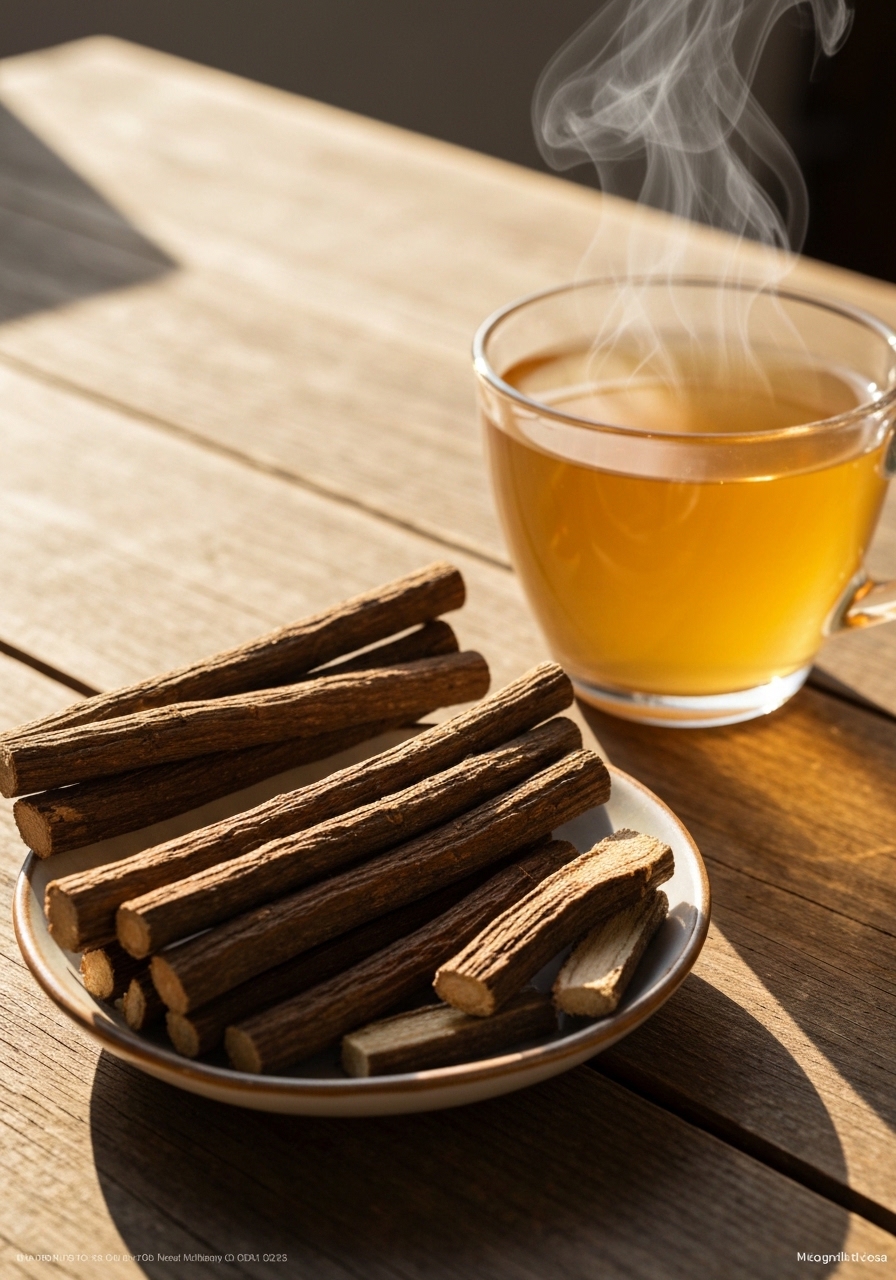
Slippery elm tea works similarly to DGL licorice — it contains mucilage, a gel-like substance that coats and soothes irritated tissue. It’s not as well-studied as ginger or licorice, but it has a long history of use for digestive complaints and is generally well-tolerated. The taste is mild and slightly sweet. I use it less often than ginger or chamomile, but it’s a reasonable option if those don’t agree with you.
Teas That Make Acid Reflux Worse
This is where I got tripped up for years, and I’ve written about the full mechanics of how tea causes heartburn elsewhere. But the summary:
Peppermint tea is the biggest offender that people don’t expect. Menthol directly relaxes the lower esophageal sphincter (LES) — the muscular valve that keeps stomach acid where it belongs. When the LES relaxes, acid flows upward. Peppermint is excellent for stomach cramps and bloating because that same muscle-relaxing effect soothes intestinal spasms. But if your problem is acid going the wrong direction, peppermint makes it worse. This is well-established enough that gastroenterologists routinely tell GERD patients to avoid all mint.
Strong black tea hits you with a triple combination: caffeine relaxes the LES, tannins stimulate acid production, and the tea itself is mildly acidic. Drinking strong black tea on an empty stomach is one of the most reliable ways to trigger reflux if you’re prone to it.
Citrus and hibiscus teas are directly acidic. Hibiscus has a pH around 2.5-3.0 — for reference, stomach acid is about pH 1.5-3.5. You’re essentially pouring more acid onto already-irritated tissue. Lemon tea, orange peel blends, rosehip tea — all acidic enough to cause problems.
Green tea is better than black tea but not neutral. It still contains caffeine (25-45mg per cup) and tannins. If you’re having reflux issues and drinking green tea regularly, it’s worth swapping to an herbal option for a week to see if symptoms improve.
How to Brew Tea for a Sensitive Stomach
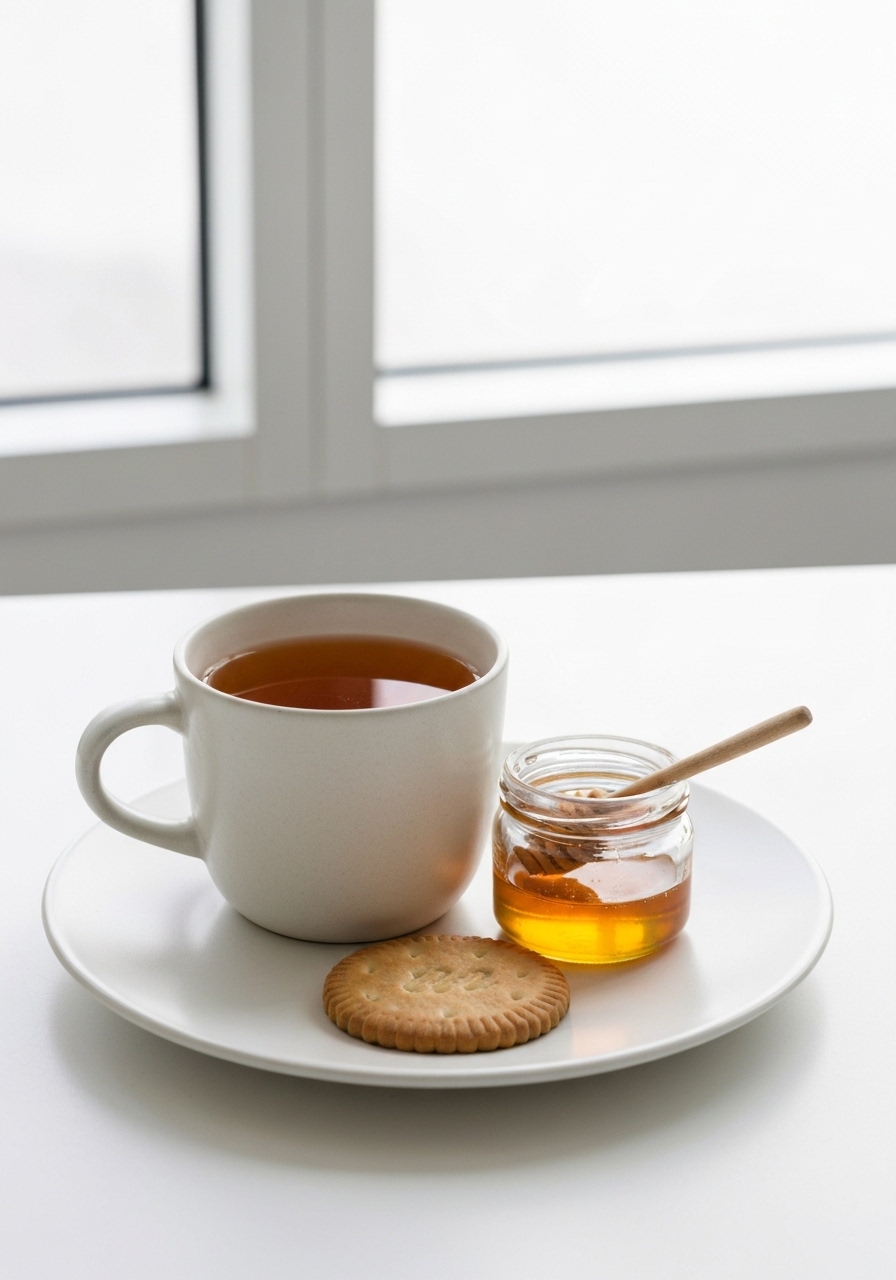
Beyond choosing the right tea, how you brew and drink it matters when you’re dealing with reflux.
Don’t drink on an empty stomach. Even gentle teas can trigger symptoms when your stomach is empty. Have a few crackers, a piece of toast, or a banana first. The food helps buffer acid and gives your stomach something to work on besides its own lining.
Keep it lukewarm, not hot. Very hot liquids can relax the LES. I know — hot tea is the whole point. But letting it cool for a few minutes before drinking reduces the risk of triggering reflux. Warm is fine; scalding is not.
Steep shorter for caffeinated teas. If you don’t want to give up green or black tea entirely, steeping for 2 minutes instead of 5 reduces the caffeine and tannin extraction significantly. It’ll taste weaker, but your esophagus will thank you.
Don’t lie down afterward. This applies to everything you eat or drink with reflux, but it’s worth repeating. Wait at least 30 minutes after finishing your tea before reclining. Gravity is a free anti-reflux tool — use it.
Consider timing around meals. Many people find that drinking tea between meals rather than with food works better. A full stomach increases upward pressure on the LES, and adding liquid volume makes that worse. If you experience post-meal reflux, try having your tea an hour before or after eating instead. For more on how different teas interact with general stomach discomfort, I’ve covered the broader digestive picture separately.
Frequently Asked Questions
Can I drink ginger tea every day for acid reflux?
Yes, moderate daily ginger tea (1-2 cups) is generally safe for ongoing use. Most studies used ginger consistently over several weeks with no adverse effects at standard tea-strength doses. The main caution is that very strong ginger tea in large quantities can itself cause stomach irritation — keep it moderate. If you take blood thinners, talk to your doctor first, as ginger has mild anticoagulant properties.
Is decaf tea safe for acid reflux?
Decaf removes the caffeine problem but not the tannins or acidity. It’s better than regular caffeinated tea, but herbal options like ginger, chamomile, and licorice root are still the safest bet. If you specifically miss the taste of black tea, decaf steeped for a short time is a reasonable compromise.
Does adding milk to tea help with acid reflux?
It’s complicated. Milk temporarily neutralizes acid, which is why it feels soothing initially. But dairy — particularly full-fat — stimulates additional acid production over the following hour. The net effect varies by person. If you want to add something, oat milk or almond milk are less likely to trigger rebound acid production than cow’s milk.
Should I stop drinking tea entirely if I have GERD?
No — you just need to choose the right teas. Ginger, chamomile, licorice root (DGL), and slippery elm are all safe and potentially beneficial for GERD sufferers. What you should avoid or minimize is caffeinated tea (black, green, white), peppermint, and anything citrus-based or hibiscus. Many people with GERD drink herbal tea daily without any issues.
Figuring out the right teas for my reflux took more experimentation than it should have. The irony is that I was reaching for peppermint — supposedly the digestive tea — while it was actively making my symptoms worse. If you’re dealing with reflux, start with ginger tea for a week and see what happens. It was the single change that made the biggest difference for me.