
I’ve spent an embarrassing amount of time testing sleep teas. Not in a lab coat with a clipboard kind of way — more like a decade of bad sleep and a willingness to try anything before resorting to medication. I’ve tried chamomile, valerian root, lavender, passionflower, magnolia bark, and probably a dozen “sleepytime” blends. Some worked, some tasted like dirt for no payoff, and one made me so drowsy I fell asleep on the couch at 7pm.
The short answer: chamomile is the most reliable sleep tea for most people — gentle, well-studied, and tastes good enough to drink every night. But if you need something stronger, valerian root is the heavy hitter. Here’s how they all compare.
Chamomile: The Reliable Everyday Choice
Chamomile is the default recommendation for a reason. It works through apigenin, a flavonoid that binds to the same brain receptors targeted by anti-anxiety medications — just much more gently. You’re not going to get knocked out, but over a couple of weeks of nightly use, most people notice they fall asleep faster and stay asleep longer.
A 2015 trial published in the Journal of Advanced Nursing found that postnatal women who drank chamomile daily for two weeks reported significantly better sleep quality. Another study in elderly participants showed about 15-20 minutes faster sleep onset compared to placebo. Those are modest numbers, but compounded over weeks, the difference in how rested you feel is real.
What I like about chamomile is that it’s pleasant to drink. I’ve written a deeper look at chamomile and sleep if you want the full clinical breakdown, but the practical summary is: use two bags or a heaping tablespoon of loose flowers, steep for 7-10 minutes covered, and drink 60-90 minutes before bed. If you also deal with bedtime anxiety, chamomile pulls double duty — the anxiety-reducing effects overlap significantly with its sleep benefits.
Valerian Root: When You Need Something Stronger
Valerian root is the tea equivalent of bringing a bigger tool for a bigger job. It increases GABA (gamma-aminobutyric acid) levels in the brain, which is the same neurotransmitter system that benzodiazepines and drugs like gabapentin target. The effect is noticeably stronger than chamomile — closer to a mild sedative than a gentle relaxant.
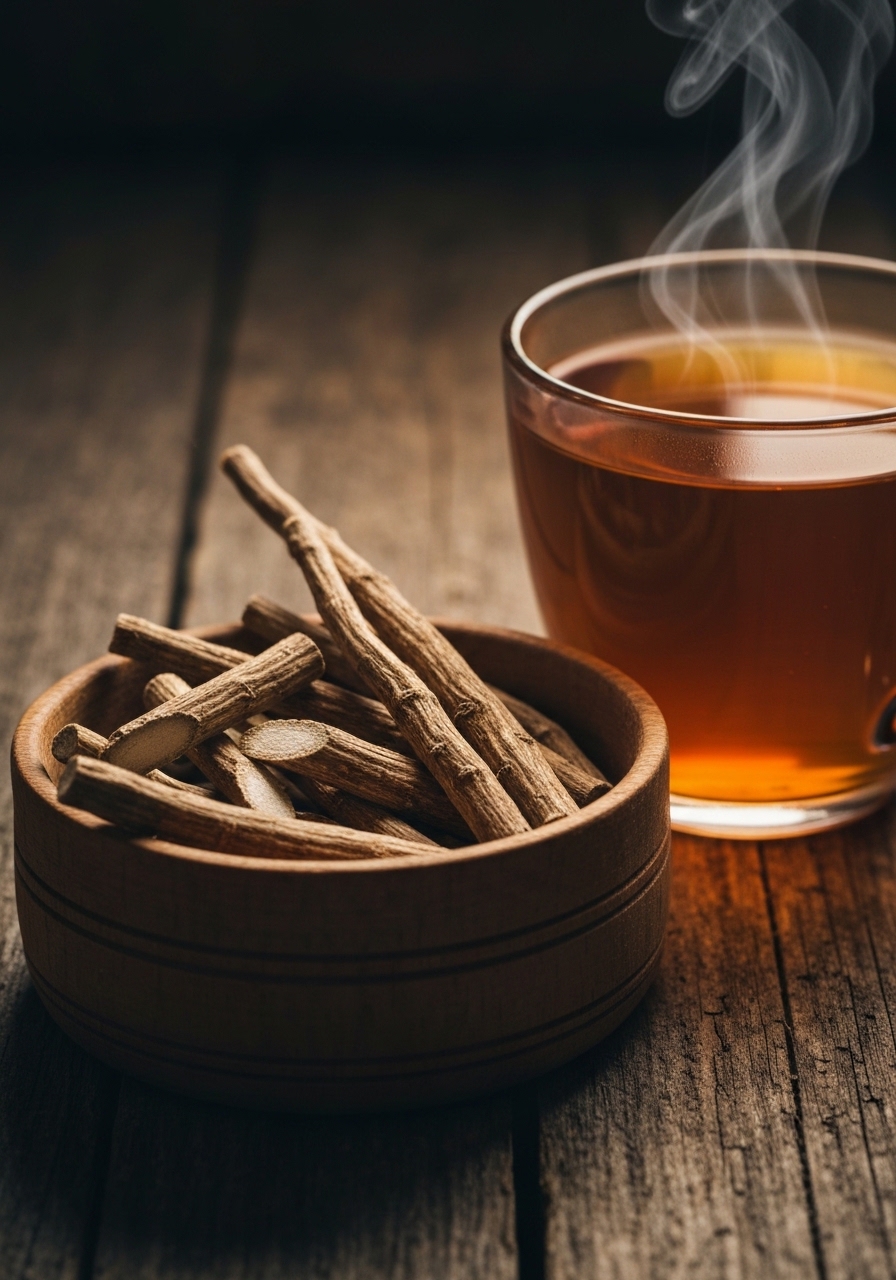
A meta-analysis in the American Journal of Medicine reviewed 16 studies and found that valerian improved subjective sleep quality without producing significant side effects. The catch is that most studies used valerian extract capsules at specific doses (300-600mg), and it’s harder to control dosage precisely with tea. What I’ve found works is using about a tablespoon of dried valerian root steeped for 10-15 minutes.
Here’s the honest downside: valerian root tea tastes and smells terrible. I’m not exaggerating — it has an earthy, slightly funky quality that some people describe as “dirty socks.” You’ll want to blend it with chamomile or add honey and lemon to make it drinkable. The taste is the main reason most people don’t stick with it, which is a shame because it’s genuinely effective.
One thing to know: valerian takes time. Unlike chamomile, which many people notice on the first night, valerian often needs 2-4 weeks of consistent use before the full benefit kicks in. Don’t try it once, decide it doesn’t work, and give up.
Lavender: Better Than You’d Expect
I was skeptical about lavender tea because it seemed more like aromatherapy marketing than a real sleep aid. I was wrong. Lavender contains linalool and linalyl acetate — compounds that have demonstrated anxiolytic (anti-anxiety) and sedative effects in clinical studies. A 2015 study in the Journal of Complementary and Alternative Medicine found that lavender improved sleep quality in ICU patients, which is arguably the hardest environment to sleep in.
Lavender tea is particularly good if anxiety is the main thing keeping you awake. It doesn’t have the strong sedative push of valerian — it’s more of a calm-down-and-stop-worrying effect. The taste is floral and mild, which some people love and others find soapy. I blend it 50/50 with chamomile, which smooths out the floral intensity and combines their mechanisms.
Passionflower: The Underrated Middle Ground
Passionflower (Passiflora incarnata) is the one most people haven’t tried, and it deserves more attention. It works by boosting GABA levels — similar to valerian but typically milder. A study published in Phytotherapy Research compared passionflower tea to a placebo over seven days and found a significant improvement in sleep quality based on participant diaries and polysomnography data.
What makes passionflower interesting is the sweet spot it hits: stronger than chamomile, milder than valerian, and it actually tastes decent. Slightly grassy with a mild sweetness. I think of it as the middle option — if chamomile isn’t cutting it but valerian is too aggressive (or too foul-tasting), passionflower is worth a week-long trial.
Magnolia Bark: The Least Known, Most Interesting
Magnolia bark tea (from Magnolia officinalis) is relatively obscure in Western tea culture but has centuries of use in traditional Chinese and Japanese medicine. The active compounds — honokiol and magnolol — bind to GABA-A receptors and have shown anxiolytic and sedative effects in animal studies. Human research is still limited, but early clinical trials are encouraging.
I’ve tried magnolia bark tea periodically and found it effective, though the evidence is thinner than for chamomile or valerian. The taste is mildly bitter and woody — not unpleasant, but not something you’d drink for enjoyment. I treat it as an occasional option when I’m particularly wired, not a nightly staple.
The Caffeine Factor
None of the teas on this list contain caffeine — they’re all herbal, not made from the Camellia sinensis plant. But if you’re struggling with sleep, it’s worth looking at your caffeine consumption during the day. Caffeine has a half-life of about 5-6 hours, which means that 3pm coffee still has half its caffeine in your system at 9pm. I’ve written about how tea’s caffeine affects sleep in detail, but the short version is: no amount of chamomile at bedtime will fully counteract a late-afternoon espresso.
My Bedtime Tea Routine
After all this testing, here’s where I’ve landed. On normal nights, I drink chamomile — two bags, 8-minute steep, splash of oat milk and honey — about 90 minutes before bed. On nights when my brain won’t shut off, I swap in a chamomile-passionflower blend. I keep valerian root for the occasional rough patch when sleep has been bad for several days in a row.
The tea itself is only one part of the routine, though. Putting the kettle on is my cue to put my phone away. The 10 minutes of steeping is dead time I fill by tidying up or stretching. Sipping the tea happens while I read. The whole thing becomes a 90-minute wind-down that my brain now associates with approaching sleep. That behavioral conditioning — which a cup of tea naturally creates — might honestly be as valuable as the apigenin or GABA effects.
Frequently Asked Questions
Can I mix different sleep teas together?
Yes, and I’d actually recommend it. Chamomile plus lavender is a great combination — the apigenin from chamomile and the linalool from lavender work through different pathways. Chamomile plus passionflower is another good pairing. I’d be cautious about combining valerian with other strong sedative herbs, though, since the combined GABA effect can make you excessively groggy the next morning.
How long does it take for sleep tea to work?
Single-night effects are usually subtle — chamomile and passionflower may help you fall asleep 10-20 minutes faster on the first night. The real benefits show up after 1-2 weeks of consistent nightly use, as the relaxation compounds build up and your brain forms the behavioral association. Valerian specifically needs 2-4 weeks before you feel the full effect.
Are sleep teas safe to use with melatonin?
Generally yes, since they work through different mechanisms — melatonin regulates your circadian clock while herbal teas promote relaxation. Many people use both. That said, combining valerian root with melatonin can sometimes cause excessive drowsiness or vivid dreams. Start with one, and if you add the other, begin with a low melatonin dose (0.5-1mg) to see how you respond.
Will sleep teas make me groggy in the morning?
Chamomile, lavender, and passionflower rarely cause morning grogginess at normal tea-strength doses. Valerian root is the one to watch — some people report a mild “hangover” feeling, especially at higher doses or when first starting. If this happens, reduce the amount of valerian root you’re steeping or switch to a milder option. Timing helps too — drinking it 90 minutes before bed rather than right at bedtime reduces the chance of next-day effects.
I used to think sleep teas were wishful thinking — that people just convinced themselves warm liquid made them sleepy. After years of testing, I’m genuinely convinced that the right tea, used consistently as part of a wind-down routine, makes a measurable difference. Start with chamomile for a couple of weeks. If you need more, work your way up to passionflower or valerian. And whatever you do, stop looking at your phone in bed — no tea on earth can fix that.