
The first time ginger tea actually rescued me from nausea was on a ferry crossing in rough weather. I’d brought a thermos of strong ginger tea on a friend’s recommendation — and while half the passengers were turning green, I was uncomfortable but functional. That experience turned me from a skeptic into someone who always keeps fresh ginger in the kitchen. Ginger is the strongest option, but it is not the only one — we compare it against peppermint, chamomile, and lemon in our guide to tea for nausea.
Ginger tea is one of the most studied natural remedies for nausea, and the evidence is genuinely strong. Not “promising” strong — actually clinically validated across multiple types of nausea. Here’s what the research says and the best way to use it.
The Evidence Is Surprisingly Solid
Unlike many herbal remedies where the research is thin or inconclusive, ginger has a substantial body of clinical evidence behind it for nausea relief.
Morning sickness: A 2014 systematic review in Nutrition Journal analyzed 12 randomized controlled trials involving 1,278 pregnant women and concluded that ginger significantly reduced nausea compared to placebo. Multiple medical organizations, including the American College of Obstetricians and Gynecologists, recognize ginger as a first-line treatment option for pregnancy-related nausea.
Post-surgery nausea: A meta-analysis in the British Journal of Anaesthesia found that ginger was as effective as metoclopramide (a standard anti-nausea drug) at preventing postoperative nausea and vomiting, with significantly fewer side effects.
Chemotherapy-induced nausea: Research published in Supportive Care in Cancer showed that ginger supplementation alongside standard anti-nausea medication reduced chemotherapy-related nausea by an additional 40% compared to medication alone.
Motion sickness: The evidence here is more mixed. Some studies show benefit, others don’t. My personal experience says it helps, but I can’t point to a definitive clinical trial confirming it. What’s consistent is that ginger seems to help more with the nausea component of motion sickness than the dizziness.
How Ginger Actually Works
The active compounds responsible are gingerols and shogaols — bioactive molecules concentrated in the ginger root. They work through several mechanisms:
Serotonin receptor antagonism. Ginger compounds block 5-HT3 serotonin receptors in the gut — the same receptors targeted by ondansetron (Zofran), one of the most prescribed anti-nausea medications. This is likely the primary mechanism for its anti-nausea effects.
Gastric motility. Ginger speeds up gastric emptying — how quickly food moves from your stomach into your small intestine. Delayed gastric emptying is a common cause of nausea, and by accelerating this process, ginger addresses one of the root causes rather than just masking symptoms.
Anti-inflammatory effects. Ginger’s anti-inflammatory properties help reduce inflammation in the GI tract that can contribute to nausea and digestive discomfort.
How to Make It for Maximum Effect
There’s a meaningful difference between a weak cup of ginger tea from a tea bag and a properly made cup using fresh ginger. For nausea relief specifically, you want a strong brew.
Fresh ginger method (best results):
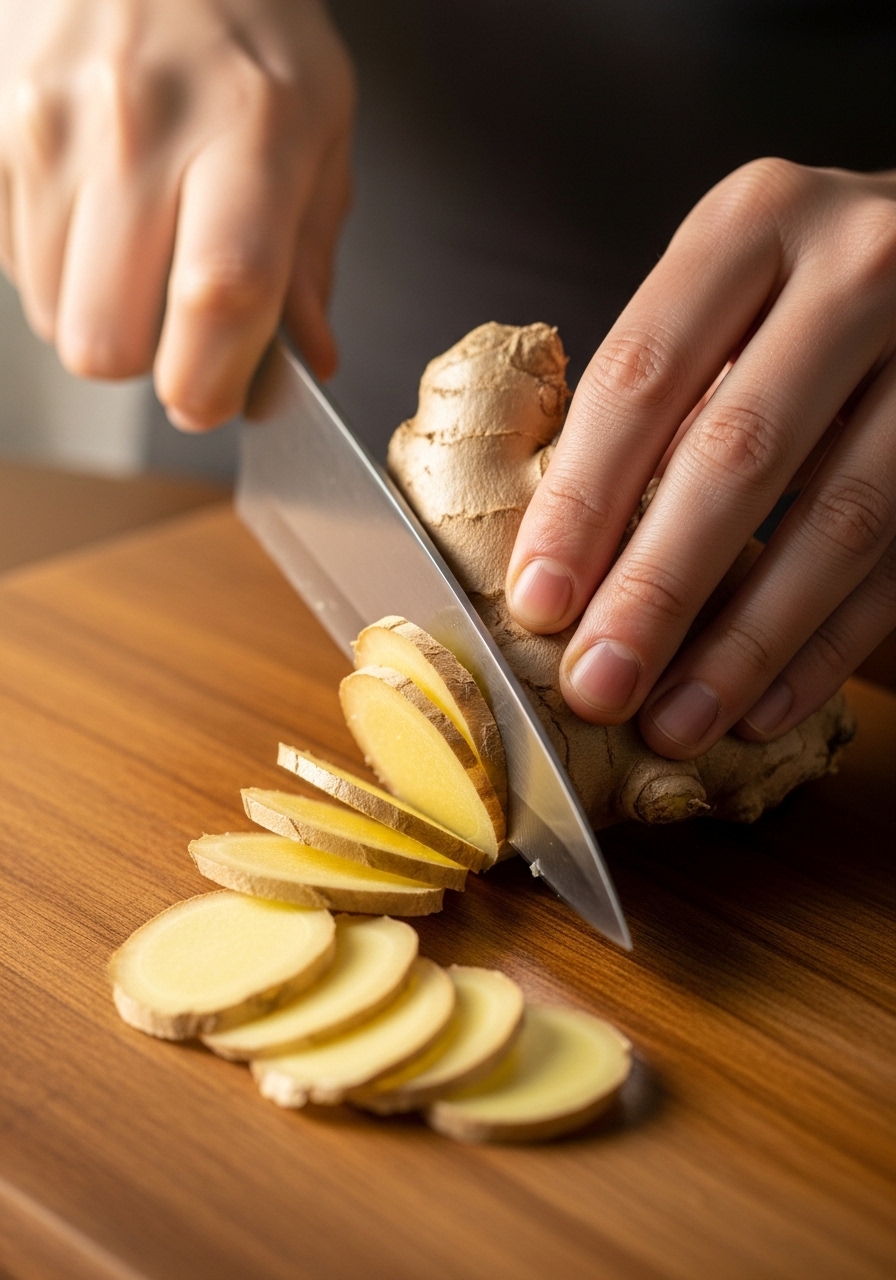
- Cut a 2-inch piece of fresh ginger root. No need to peel it, but scrub it clean.
- Slice it thin — about 1/8 inch thick. More surface area means more compound extraction.
- Bring 2 cups of water to a boil in a small saucepan.
- Add the ginger slices and reduce to a simmer.
- Simmer for 10-15 minutes. The water will turn a pale gold. For severe nausea, go 20 minutes for a stronger brew.
- Strain into a mug. Add honey and/or lemon juice to taste.
This simmer method extracts significantly more gingerols than simply steeping sliced ginger in hot water. The effective dose in most clinical studies translates to roughly 1-2 cups of strong ginger tea per day.
Quick method (when you need it fast): Grate about a tablespoon of fresh ginger directly into a mug, pour boiling water over it, cover and steep for 5 minutes. Strain through a fine mesh strainer. Not as potent as the simmer method, but much faster when nausea is already hitting.
Tea bag option: If fresh ginger isn’t available, look for tea bags that list ginger root as the primary ingredient (not “ginger flavoring”). Use two bags per cup and steep for the full recommended time. It won’t be as strong as fresh, but it’s still effective.

Timing and Dosage
For prevention (morning sickness, travel, pre-surgery): Drink a cup 30-60 minutes before the expected trigger. For morning sickness, some women find that keeping a thermos by the bed and sipping before getting up works well.
For active nausea: Sip slowly. Don’t gulp it — small, frequent sips are easier on a nauseous stomach than drinking a full cup quickly. If even sipping feels difficult, try letting it cool and taking tiny amounts over 30 minutes.
Daily limit: Most research uses 1-4 grams of ginger per day. In tea terms, that’s roughly 2-4 cups of moderate-strength ginger tea. Going beyond this can cause heartburn or mild stomach irritation in some people, which defeats the purpose.
When Ginger Tea Won’t Be Enough
Ginger works well for functional nausea — the kind caused by morning sickness, motion, dietary choices, or mild stomach bugs. It’s not a substitute for medical treatment when nausea is caused by:
- Severe food poisoning with high fever or bloody stool
- Head injury or concussion
- Appendicitis or other acute abdominal conditions
- Nausea lasting more than 48 hours without obvious cause
- Nausea accompanied by severe headache and stiff neck
If you’re experiencing persistent or severe nausea, see a healthcare provider.
Pregnancy note: While ginger is generally considered safe during pregnancy, discuss it with your OB-GYN first, especially if you’re in the first trimester. The standard recommendation is to stay under 1 gram of dried ginger (or about 2 cups of tea) per day during pregnancy. For more on herbal teas during pregnancy, check the full safety guide.
FAQ
How quickly does ginger tea work for nausea?
Most people notice some relief within 20-30 minutes. The gastric motility effects kick in relatively quickly. For prevention (like morning sickness), drinking it 30-60 minutes beforehand is most effective.
Can I drink ginger tea on an empty stomach?
Yes, and for morning sickness it’s often most effective on an empty stomach. However, very strong ginger tea can cause heartburn in some people when consumed without food. If that happens, try pairing it with a few plain crackers.
Is fresh ginger better than ginger supplements for nausea?
Fresh ginger tea contains the full spectrum of ginger compounds, while supplements standardize to specific extracts. Both work — clinical trials have used both forms successfully. Tea has the added advantage of hydration, which matters when you’re nauseous and potentially not eating or drinking enough.
Does ginger ale work as well as ginger tea?
Most commercial ginger ales contain very little actual ginger — they use “natural flavors” that provide taste without meaningful amounts of gingerols. The carbonation might temporarily help settle your stomach, but you’re not getting the medicinal benefit. If you want the digestive benefits of ginger, tea made from real ginger root is far more effective.
Ginger tea has become a permanent fixture in my kitchen. It’s one of those things where the folk wisdom and the clinical science actually agree — and in my experience, the real thing works noticeably better than any supplement or processed version. Keep fresh ginger in your fridge (it stays good for weeks), and you’ll always have an effective nausea remedy within reach.