
Matcha has been marketed so aggressively over the past few years that I initially wrote it off as a wellness trend that would fade. Then I actually read the research — and it turns out that behind the Instagram hype and overpriced lattes, matcha has some of the strongest evidence of any tea for genuine health benefits. The reason is simple: you’re consuming the entire tea leaf, not just what dissolves into water during steeping.
Why Matcha Is Different From Regular Green Tea
With normal green tea, you steep leaves in water, drink the liquid, and throw the leaves away. You’re getting maybe 30-40% of the tea’s total nutrients — whatever was water-soluble enough to dissolve during steeping.
With matcha, the whole leaf is stone-ground into a fine powder. You whisk that powder into water and drink it all. This means you consume 100% of the leaf’s nutrients — including the fat-soluble compounds and fiber that never make it into a cup of steeped tea.
The practical result: matcha contains roughly 3x the EGCG (the most studied green tea catechin) of regular brewed green tea, cup for cup. It also contains significantly more L-theanine, because matcha plants are shade-grown for 20-30 days before harvest, which dramatically increases their amino acid content.
The Benefits With Good Evidence
Antioxidant content. Matcha has one of the highest ORAC (antioxidant capacity) scores of any food — higher than blueberries, dark chocolate, or acai. The catechins, particularly EGCG, are potent free radical scavengers. A study in the Journal of Chromatography found that matcha contains up to 137 times more EGCG than standard green tea.
Calm focus. This is matcha’s most distinctive benefit and the one I notice most personally. The combination of caffeine (~70mg per serving, roughly equal to a cup of coffee) with high L-theanine creates a state of alert calm that’s genuinely different from coffee’s stimulation. L-theanine promotes alpha brain wave activity — the type associated with relaxed concentration. Multiple studies have confirmed that the caffeine-theanine combination improves attention, task switching, and reduces the jittery side effects of caffeine alone.
Metabolic effects. A study in the American Journal of Clinical Nutrition found that consuming matcha green tea increased thermogenesis (calorie burning) from 8-10% to 35-43% of daily energy expenditure during moderate exercise. That’s a meaningful boost. Combined with the general metabolic benefits of green tea, matcha is one of the more evidence-supported natural metabolic enhancers.
Cardiovascular health. Regular green tea consumption is associated with reduced LDL cholesterol, lower blood pressure, and reduced risk of heart disease in large population studies. Since matcha delivers more of the active compounds, the cardiovascular benefits are likely at least as strong, though matcha-specific long-term studies are still limited.
Liver protection. Several studies have found that green tea catechins, particularly at the concentrations found in matcha, support liver function and may help protect against liver damage. A meta-analysis of 15 studies found that green tea consumption was associated with significantly lower risk of liver disease.
How to Buy Matcha Without Getting Ripped Off
This is where the marketing gets misleading. Not all matcha is equal, and price doesn’t always correlate with quality.
Ceremonial vs. culinary grade: Ceremonial grade is meant to be drunk straight — it’s smoother, sweeter, and more expensive. Culinary grade is intended for lattes, smoothies, and baking — it’s more astringent but still nutritionally excellent. For health benefits, culinary grade is perfectly fine and significantly cheaper.
Color test: Good matcha is vibrant bright green. If it’s yellow-green, olive, or brownish, it’s either low quality or old. The bright green comes from the shade-growing process that increases chlorophyll and L-theanine.
Origin: Japanese matcha (especially from Uji, Nishio, or Kagoshima) is generally the highest quality. Chinese-produced matcha can be good but is more variable. “Matcha” from other origins is often just ground green tea, which lacks the shade-growing that makes matcha special.
Price reality: Decent culinary-grade matcha runs $15-25 per ounce. Ceremonial grade is $25-50+ per ounce. If you’re seeing matcha at $5-8 per ounce, it’s likely low-grade or not true matcha. That said, you don’t need to spend $50 — a good mid-range culinary matcha delivers essentially the same health benefits as premium ceremonial grade. The flavour gap is much wider than the nutritional one — we cover that in what matcha actually tastes like.
How I Make It
Traditional method:
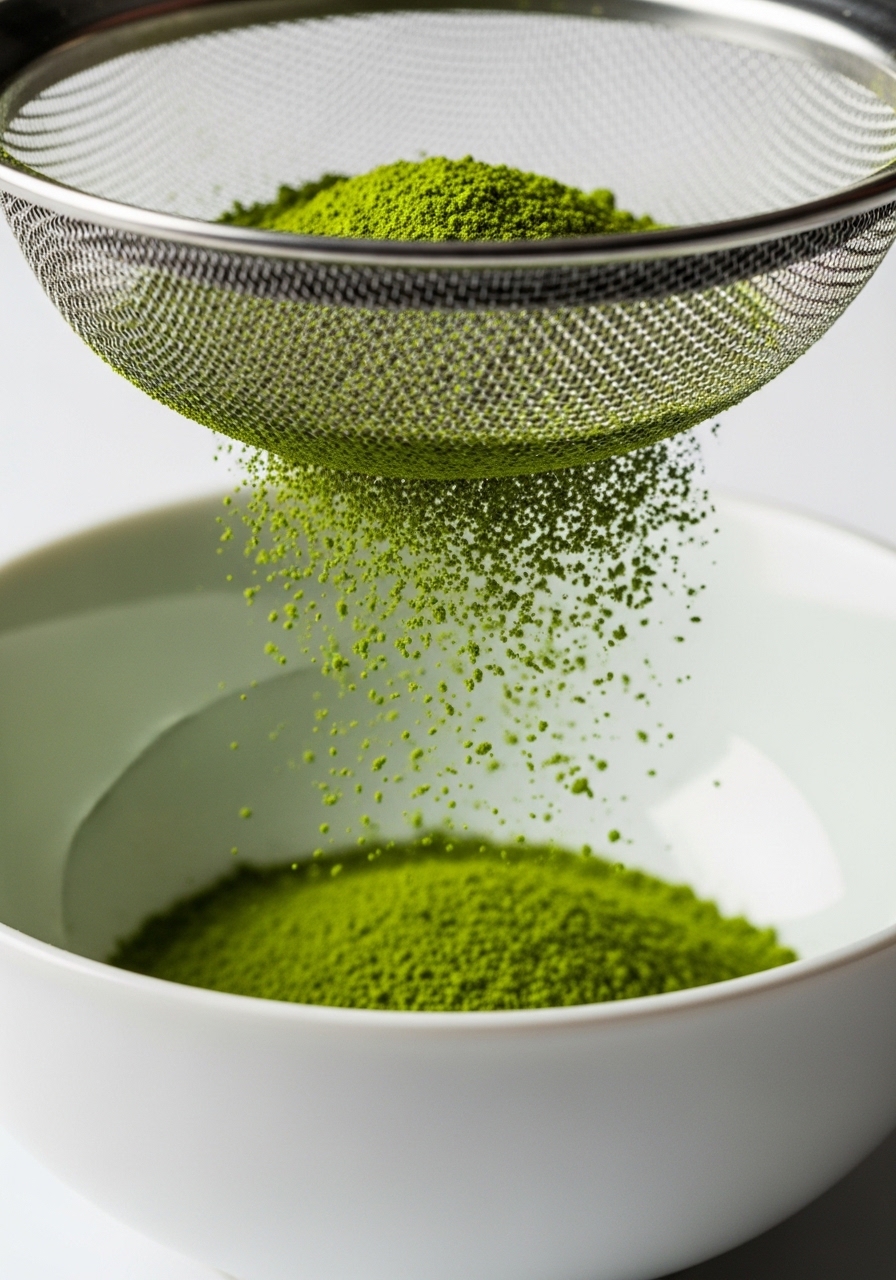
- Sift 1-2 teaspoons of matcha through a fine strainer into a bowl (this prevents clumps)
- Add 2-3 tablespoons of hot water (not boiling — around 175°F / 80°C)
- Whisk vigorously with a bamboo whisk in a W or M motion until frothy
- Add remaining hot water (about 6 oz) and whisk again briefly
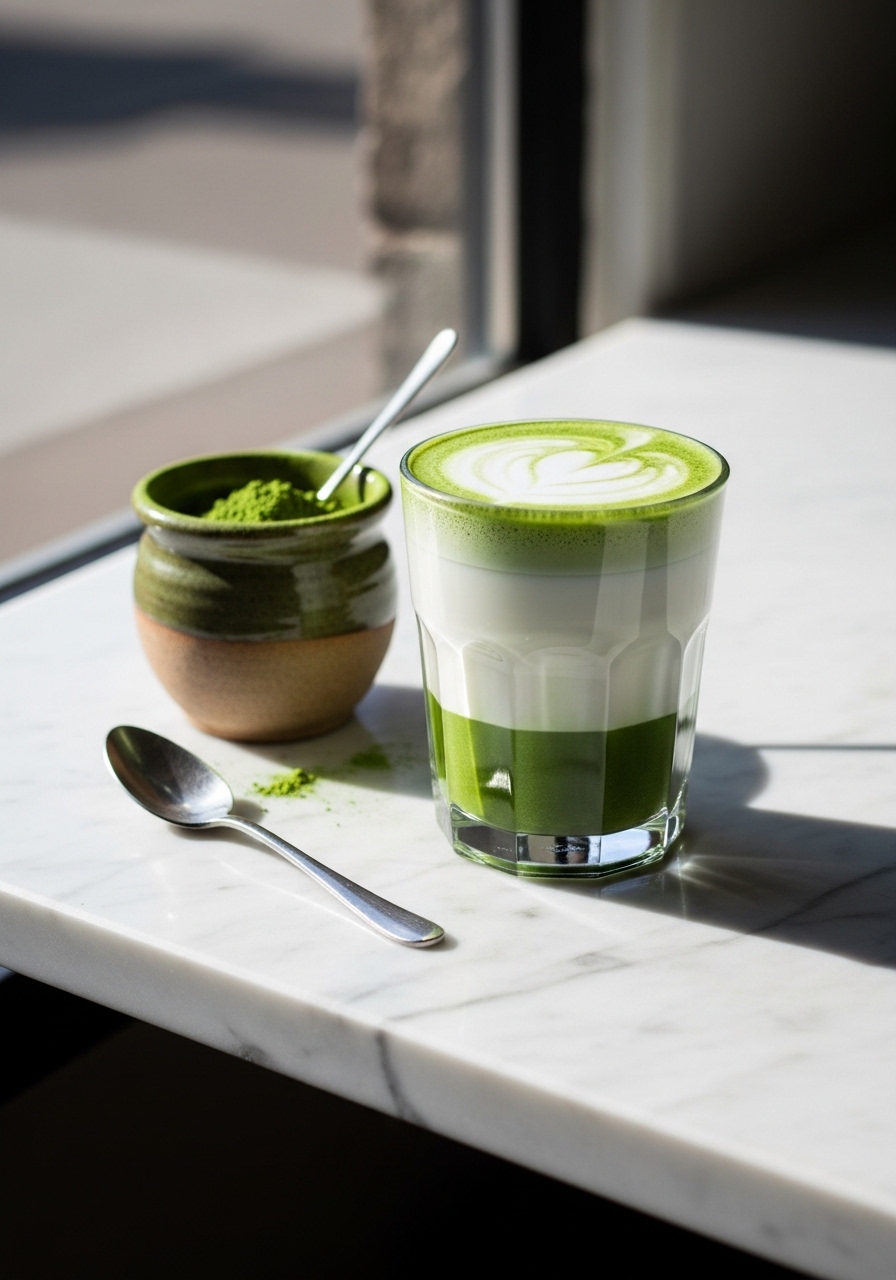
Everyday latte method (what I actually do most mornings):
- Add 1 teaspoon matcha to a mug
- Add a splash of hot water and whisk or stir until dissolved
- Heat and froth your milk (oat milk makes the best matcha lattes)
- Pour the milk over the matcha, stir
A bamboo whisk (chasen) makes the best matcha, but a small regular whisk or even a milk frother works fine for daily use. The key is getting the powder fully dissolved — undissolved clumps are bitter and gritty. See how to make matcha for the sifting and whisking technique.
FAQ
Is matcha better than coffee?
Different, not necessarily better. Matcha provides similar caffeine levels with the added benefit of L-theanine smoothing out the energy curve. Most people who switch report more sustained energy without the crash. But coffee has its own well-documented health benefits. If coffee works well for you, there’s no strong reason to switch. If you experience jitters, anxiety, or energy crashes from coffee, matcha is worth trying.
Can you drink too much matcha?
The main concern is caffeine — 3-4 servings puts you at 200-280mg of caffeine, approaching the upper recommended daily limit. There’s also a lead consideration: tea plants can absorb lead from soil, and since you consume the whole leaf with matcha, you get more than with steeped tea. Japanese matcha typically has lower lead levels than Chinese. Limit consumption to 2-3 cups daily to stay well within safe ranges.
Does matcha stain teeth?
Less than coffee or black tea, but the catechins and chlorophyll can cause some staining over time. Rinsing your mouth with water after drinking helps. Using a straw for iced matcha lattes avoids the issue entirely.
How should I store matcha?
Matcha degrades quickly when exposed to light, heat, and air. Keep it in an airtight, opaque container in the refrigerator after opening. Use it within 1-2 months for the best flavor and nutrient content. If your matcha has turned brown or lost its bright green color, it’s past its prime.
Two years of daily matcha, and the sustained focus is what keeps me coming back. Not the antioxidants (though those are a welcome bonus) — it’s that feeling of being alert without being wired, productive without being frantic. It’s a genuinely different energy than coffee provides. Start with culinary grade, try it as a latte, and see if you notice the difference. Most people do.