
I first tried rooibos tea because I needed something to drink in the evening that wasn’t water and wasn’t caffeinated. A friend who’d spent time in South Africa handed me a cup and said “just try it.” I expected it to taste like weak herbal tea — the kind you drink out of obligation. Instead, it was naturally sweet, full-bodied, and had this warm, almost honey-vanilla quality that I genuinely enjoyed. I’ve been drinking it almost every evening since.
Rooibos (pronounced “ROY-boss”) comes exclusively from the Aspalathus linearis plant, which grows only in the Cederberg region of South Africa. It’s not technically tea — it’s an herbal tisane — but it brews and drinks like tea, and the health benefits are substantial enough to take seriously.
What Makes Rooibos Different
Most herbal “teas” are pleasant but nutritionally unremarkable. Rooibos stands out because it contains a unique antioxidant profile you won’t find in any other plant.
Aspalathin is the star compound — a flavonoid found exclusively in rooibos. Research published in Phytomedicine has shown aspalathin has significant effects on blood sugar regulation, potentially improving insulin sensitivity and reducing glucose spikes after meals. This makes rooibos particularly interesting for people managing blood sugar levels.
Zero caffeine, naturally. Unlike decaf tea (which is caffeinated tea with the caffeine chemically removed), rooibos never contains caffeine at all. There’s nothing removed, so you get the full spectrum of its natural compounds. This makes it genuinely suitable for evening drinking without any sleep concerns.
Low tannins. Rooibos has significantly fewer tannins than black or green tea. This means it won’t interfere with iron absorption (a concern with regular tea for some people), it’s extremely gentle on the stomach, and — practically speaking — you can’t really over-steep it. Forget about it for 20 minutes? It’ll still taste fine.
Mineral content. Rooibos contains calcium, magnesium, potassium, and zinc in small but meaningful amounts. It’s not a supplement replacement, but the mineral content adds up if you’re drinking 2-3 cups daily.
The Health Benefits (With Evidence)
Heart health: A study published in the Journal of Ethnopharmacology found that drinking 6 cups of rooibos daily for 6 weeks significantly reduced LDL cholesterol and triglycerides while increasing HDL cholesterol in adults at risk for cardiovascular disease. The effect was attributed to rooibos’s unique polyphenol content.
Blood sugar management: The aspalathin in rooibos has been shown in both animal and human studies to improve glucose uptake and insulin secretion. While it’s not a treatment for diabetes, it may offer supportive benefits for blood sugar regulation.
Anti-inflammatory effects: Rooibos contains several compounds with anti-inflammatory properties, including nothofagin and luteolin. These may help with conditions involving chronic low-grade inflammation.
Skin health: Topical application of rooibos extract has shown promise for reducing skin irritation and signs of aging in preliminary studies. Some people also report improvements from drinking it regularly, though the evidence for oral consumption affecting skin is less direct.
Bone health: The mineral content (calcium, manganese, fluoride) combined with polyphenols that may enhance osteoblast activity has led researchers to investigate rooibos’s potential role in bone health, though this research is still early-stage.
Red vs. Green Rooibos
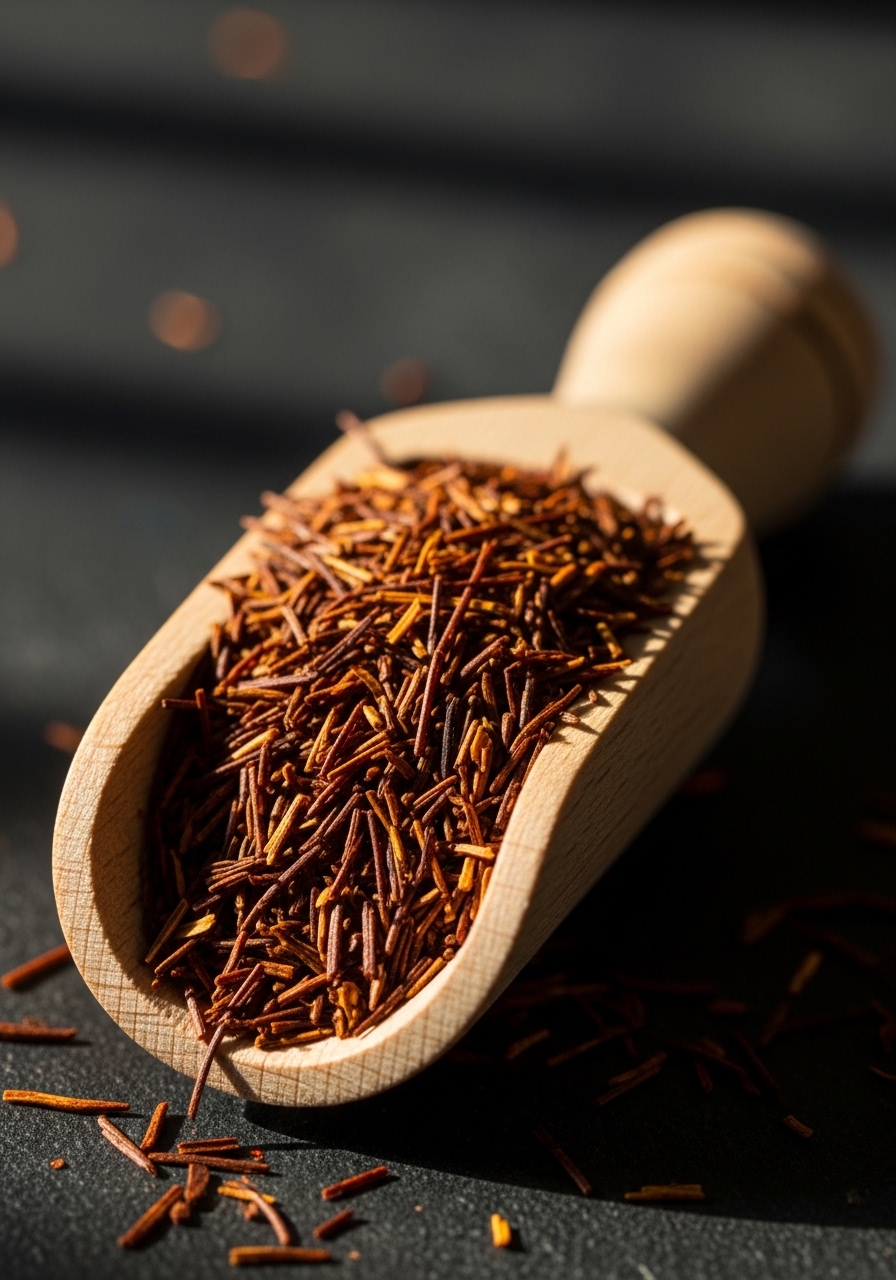
Most rooibos you’ll encounter is “red” rooibos — the traditional version that’s been oxidized (similar to how green tea becomes black tea). The oxidation process gives it the characteristic red-brown color and sweet, warm flavor.
Green rooibos is the unoxidized version. It’s lighter in color, grassier in flavor, and contains higher levels of aspalathin and other antioxidants (since oxidation breaks down some of these compounds). It’s more expensive and harder to find, but if you’re drinking rooibos primarily for health benefits, green rooibos is the more potent option.
For everyday drinking? Red rooibos tastes better to most people. For maximum antioxidant content? Green rooibos wins. I keep both and alternate.
How to Brew Rooibos
Rooibos is the most forgiving tea to brew. Here’s my approach:
Basic brewing:
- Use 1.5 teaspoons of loose rooibos per cup (or one tea bag)
- Water at full boil — 212°F / 100°C. Unlike green tea, rooibos handles boiling water perfectly
- Steep 5-7 minutes for a standard cup, up to 10+ minutes for a stronger brew
- It won’t get bitter with longer steeping, so don’t stress about timing
Rooibos latte (my evening favorite):
- Brew rooibos double-strength (2 tea bags or 1 tablespoon loose per cup)
- Heat and froth milk of your choice (oat milk works exceptionally well)
- Pour the tea into the frothed milk
- Add a touch of honey or vanilla extract

The natural sweetness of rooibos means you need very little added sweetener, if any. It also takes well to cinnamon, vanilla, ginger, and citrus — South African rooibos blends with these additions are common and worth seeking out.
FAQ
Does rooibos tea have any side effects?
Rooibos is extremely well-tolerated. There are rare case reports of liver effects with very high consumption, but at normal drinking levels (1-6 cups daily), it has an excellent safety profile. It’s considered safe during pregnancy, though always check with your provider.
Can kids drink rooibos?
Yes — the lack of caffeine makes rooibos one of the safest teas for children. In South Africa, it’s commonly given to babies and toddlers (diluted and cooled). The mineral content and lack of tannins make it a reasonable beverage choice for kids.
Is rooibos tea good for weight loss?
Rooibos isn’t a weight loss tea in the way green tea is sometimes marketed. However, it’s zero calories, naturally sweet (reducing sugar cravings), and the aspalathin may support healthy metabolism. As a replacement for sugary drinks, it can indirectly support weight management.
Where should I buy rooibos?
For the best quality, look for South African brands or specialty tea shops that source directly from the Cederberg region. Organic rooibos is widely available. Avoid rooibos “blends” where rooibos is listed second or third — you want it as the primary ingredient.
Rooibos has become my default evening drink. It fills that need for something warm and flavorful after dinner without any caffeine concerns, and the health benefits — particularly for heart health and blood sugar — are a genuine bonus rather than marketing hype. If you haven’t tried it, or if you’ve only had the dusty tea-bag version, get some quality loose-leaf rooibos and brew it properly. It might surprise you.