
The first time I watched a blooming tea open, I understood why people call it art in a teapot. A tight, unassuming ball of dried leaves drops into hot water and slowly unfurls into a full flower — jasmine, chrysanthemum, lily, or marigold — while the tea brews around it. It takes about 3-5 minutes, and it’s genuinely mesmerizing to watch. Whether the tea itself is any good is a separate question, and an honest one worth answering.
What Exactly Is Blooming Tea?
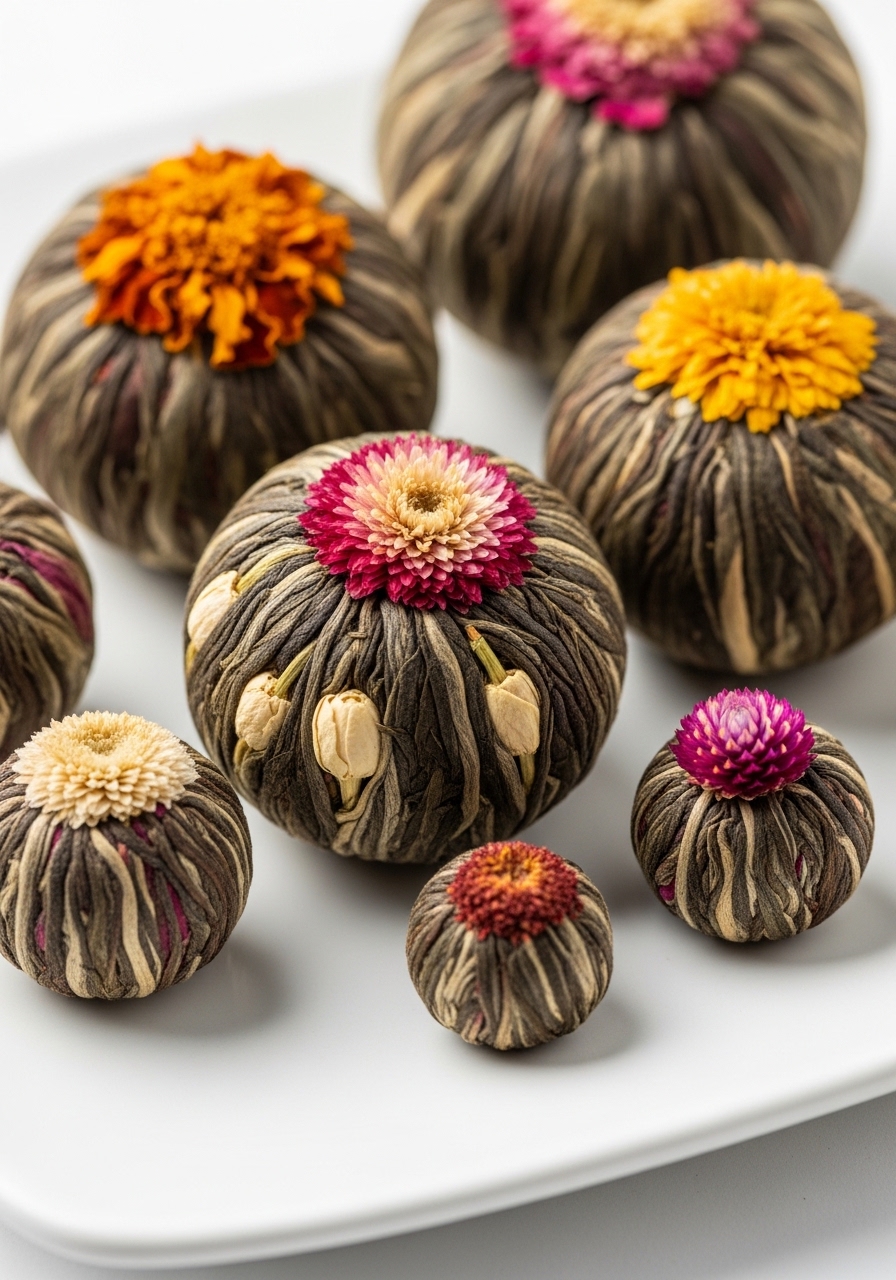
Blooming tea (also called flowering tea or artisan tea) is a bundle of dried tea leaves that have been hand-sewn around one or more dried flowers. When steeped in hot water, the bundle expands and “blooms,” revealing the flower inside. It’s a relatively modern invention — most sources trace it to the 1980s in China’s Yunnan province, though some claim older origins.
Each ball is made by hand. Artisans select long, high-grade tea leaves (usually white tea or green tea), wrap them around dried flowers, and sew the bundle into a tight ball using cotton thread. The skill required to create one that blooms symmetrically is considerable — it takes years of practice to produce consistent results.
How to Prepare Blooming Tea
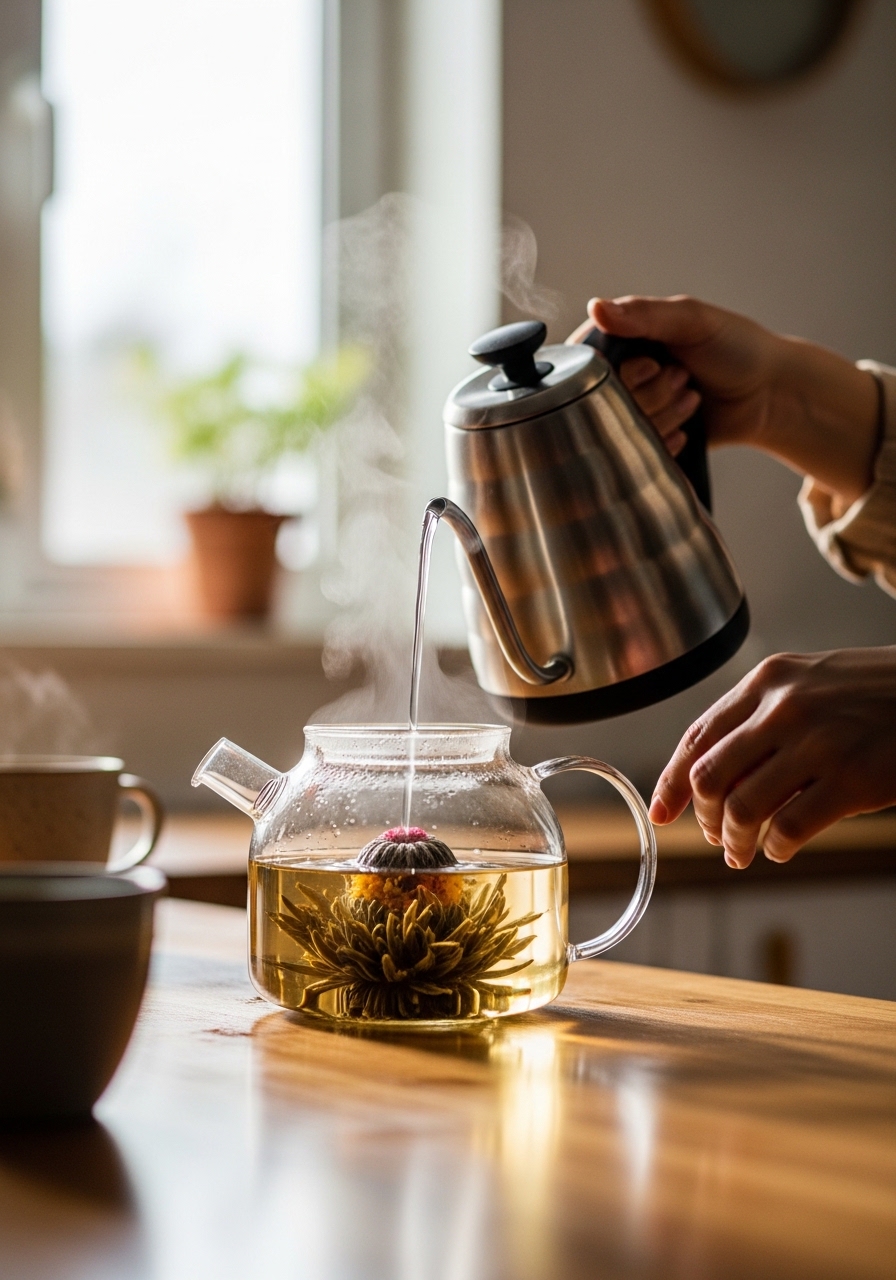
You need a clear glass teapot or a large clear glass — the whole point is watching the bloom, so an opaque vessel defeats the purpose.
- Heat your water to about 175-185°F (80-85°C). Blooming tea is typically made with green or white tea, which burn at full boiling temperature. Slightly cooler water protects the delicate flavors.
- Place one blooming tea ball in the teapot. Use about 8-12 ounces of water per ball.
- Pour the water gently. Pour along the side of the vessel rather than directly onto the ball — this lets it unfurl naturally without being knocked around.
- Wait and watch. The bloom takes 3-7 minutes depending on the size and how tightly it was bound. Don’t rush it — the slow unfurling is the experience.
- Enjoy. Once fully opened, the tea is ready to drink. You can typically re-steep the same bloom 2-3 times by adding more hot water.
What Does It Actually Taste Like?
Here’s the honest part: blooming tea is more about the visual experience than the flavor. Most blooming teas are light and mild — pleasant, floral, slightly sweet, but not as complex or flavorful as good loose-leaf green or white tea brewed properly. The flower inside is mostly decorative; jasmine flowers contribute some aroma, but chrysanthemum and lily petals add very little to the actual taste.
That said, high-quality blooming tea from a reputable source can be genuinely enjoyable. The key is the quality of the tea leaves used — blooming tea made with premium silver needle white tea tastes noticeably better than one made with lower-grade green tea. Price is usually a reliable indicator here.
Is It Worth Buying?
Blooming tea makes an excellent gift — it’s visually stunning, unusual, and doesn’t require any special equipment beyond a clear glass. It’s great for entertaining guests or as an introduction to tea for people who don’t usually drink it. The “wow factor” is real.
For daily drinking on flavor alone, you’d get more from a good loose-leaf white or green tea. Blooming tea typically costs $2-5 per ball, which is a premium for what is essentially a mild tea with a beautiful presentation.
My recommendation: keep a few in the cabinet for special occasions and guests, and drink regular loose-leaf tea for your daily cups. Both have their place.
If the visual artistry of blooming tea appeals to you, the traditional gongfu oolong ceremony offers another aesthetically beautiful tea experience with more flavor depth. For understanding the different tea types used in blooming tea, our history of tea article covers how green and white teas developed. And for the health-conscious, check our anti-inflammatory teas guide — green and white teas (the bases for blooming tea) rank among the best for antioxidant content.
Frequently Asked Questions
How many times can you use a blooming tea ball?
Most blooming tea balls can be re-steeped 2-3 times. The flower stays open after the first steeping, so subsequent cups are just about the tea flavor. Each re-steep will be lighter than the last. You can also refrigerate the opened bloom in water for a decorative display that lasts a day or two.
Does blooming tea expire?
Dried blooming tea balls last about 12-18 months if stored in a cool, dry place away from light and strong odors. Older ones will still bloom but the flavor will be more muted.
Is blooming tea caffeinated?
Yes — blooming tea typically uses green or white tea leaves, both of which contain caffeine. A single ball steeped in 8-12 ounces of water will contain roughly 15-35mg of caffeine, less than a typical cup of green tea because the leaf-to-water ratio is lower.
Where can I buy good blooming tea?
Specialty tea shops (online or local) tend to carry higher-quality blooming tea than grocery stores. Look for vendors who specify the tea base (silver needle white tea is premium) and the flower type. Avoid very cheap options — they tend to use low-grade tea that produces a bitter, flat cup.
Blooming tea sits at the intersection of tea and art. It’s not the most flavorful cup you’ll ever drink, but watching that flower emerge never gets old. Sometimes tea is about more than just the taste.