
I’ll admit I was skeptical the first time someone told me to put tea bags on my eyes. It sounded like the kind of advice that gets passed around without anyone checking whether it actually works. But after a few rough mornings — the kind where you look in the mirror and your eyes look like you’ve been crying for hours — I tried it. And then I looked into why it works, because it genuinely did.
The short answer: yes, tea bags can reduce puffiness around your eyes. It’s not magic, and it won’t fix structural issues, but for everyday morning puffiness from poor sleep, allergies, or fluid retention, they work noticeably well. Here’s the science and the method.
Why Tea Bags Actually Work on Puffy Eyes
Eye puffiness is usually caused by fluid accumulation in the tissue around your eyes. The skin there is thinner than anywhere else on your body — about 0.5mm compared to 2mm on the rest of your face — which makes any swelling extremely visible.
Tea bags address this through several mechanisms working together:
Caffeine constricts blood vessels. This is the biggest factor. Caffeine is a vasoconstrictor — it tightens blood vessels and reduces the fluid that leaks into surrounding tissue. This is why caffeine is a common ingredient in expensive eye creams. A wet tea bag delivers caffeine directly to the skin around your eyes, essentially doing the same thing as a $60 eye serum.
Tannins tighten skin. Tea is rich in tannins, natural astringent compounds that temporarily tighten and firm skin tissue. This helps compress the puffy area and gives your eyes a more taut, awake appearance. The tannin content is highest in black tea, followed by green tea.
Cold temperature reduces swelling. Any cold compress will help with puffiness — that’s basic physiology. Chilled tea bags combine the benefits of cold therapy with the active compounds in tea, making them more effective than a cold cloth alone.
Antioxidants reduce inflammation. Both green and black tea contain polyphenols that have anti-inflammatory effects. While these won’t produce an instant visible result, regular use can help reduce chronic inflammation that contributes to persistent puffiness. Green tea is particularly rich in EGCG, a catechin with strong anti-inflammatory properties.
Which Tea Works Best
Not all teas are equal for this purpose. Here’s what I’ve found after testing different types:
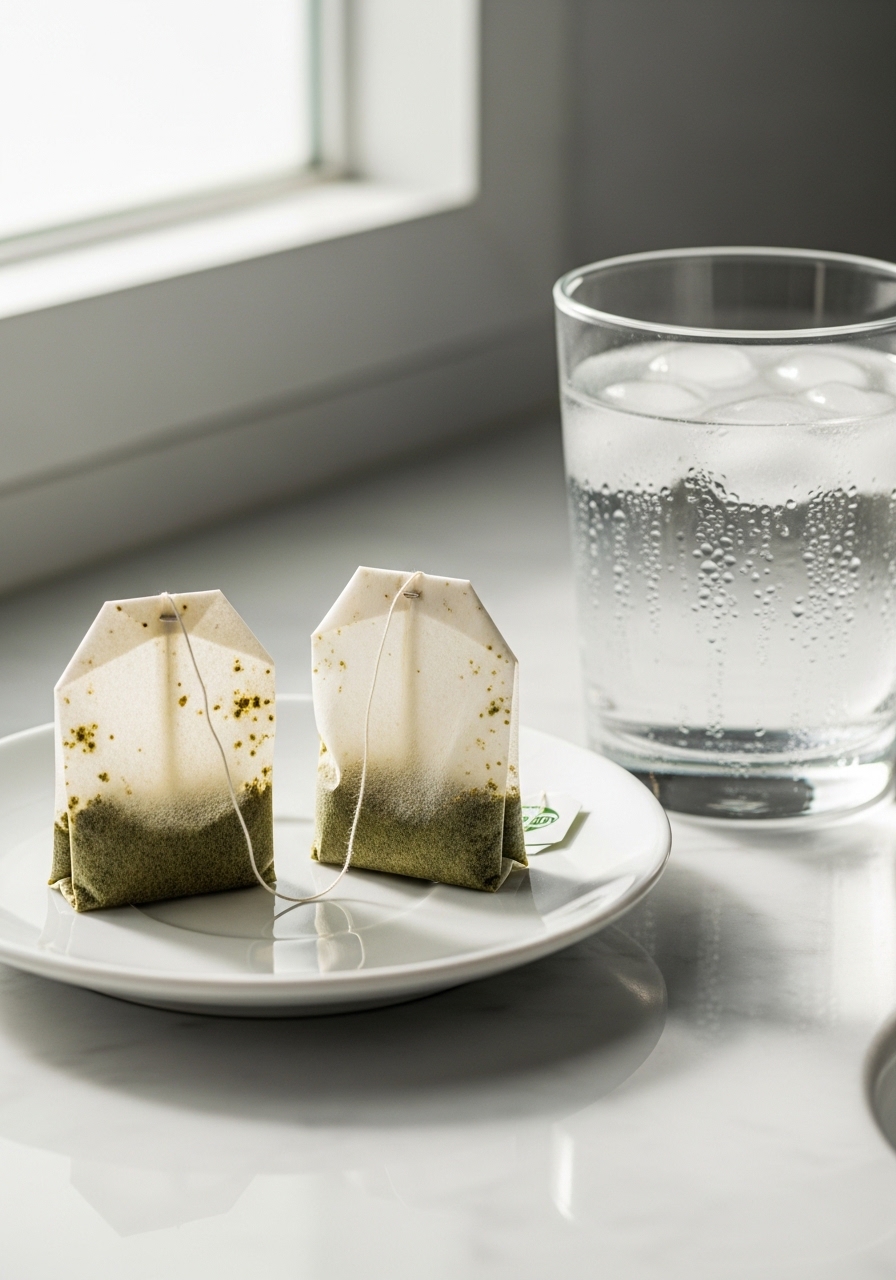
Green tea is my top choice. It has caffeine for vasoconstriction, high antioxidant content (especially EGCG), and enough tannins to provide a tightening effect. It’s also gentle enough that it rarely irritates the delicate skin around the eyes. If you’re only going to try one type, start here.
Black tea has the highest caffeine and tannin content of any true tea. It produces the most dramatic short-term tightening effect. The downside: the strong tannins can occasionally cause slight staining on very fair skin if left on too long. Limit application to 10-15 minutes with black tea.
Chamomile tea takes a different approach — it’s caffeine-free, so it won’t constrict blood vessels, but it’s an excellent anti-inflammatory. Chamomile is the best choice if your puffiness is caused by allergies or irritation rather than simple fluid retention. It’s also the gentlest option for sensitive skin.
White tea works similarly to green tea but with a milder effect. Lower caffeine, very gentle. Good if green tea feels too strong.

How to Do It Right
The method matters more than most people realize. Here’s my exact routine:
- Steep two tea bags normally — pour hot water over them and let them steep for 3-5 minutes, just as if you were making tea to drink. This activates and extracts the beneficial compounds.
- Squeeze out excess liquid. You want them damp, not dripping. Too much liquid and it runs into your eyes (unpleasant).
- Chill them. Place the squeezed tea bags in the refrigerator for 15-20 minutes, or in the freezer for 5 minutes if you’re in a hurry. You want them cold but not frozen solid.
- Apply with eyes closed for 15-20 minutes. Lie down or recline — gravity helps the fluid drain away from your eye area. I usually do this while listening to a podcast in the morning.
- Rinse gently with cool water afterward, especially if using black tea.
Timing tip: The most effective time is first thing in the morning, when fluid has pooled around your eyes overnight. I keep two pre-steeped tea bags in the fridge overnight so they’re ready when I wake up on days I know I’ll need them.
What Tea Bags Won’t Fix
Honesty matters here. Tea bags work well for:
- Morning puffiness from sleep position or poor sleep
- Mild allergic swelling
- Fluid retention from salty food or alcohol
- General tired-looking eyes
They won’t significantly help with:
- Genetic under-eye bags — if your parents have them, tea bags won’t restructure the fat pads under your eyes
- Age-related volume loss — hollowing under the eyes creates a shadow that mimics puffiness
- Chronic medical conditions — thyroid issues, kidney problems, and some medications cause puffiness that needs medical attention, not tea bags
If your puffiness is persistent regardless of sleep quality, doesn’t respond to cold compresses, or is accompanied by other symptoms, see a doctor rather than reaching for tea.
FAQ
How long should I leave tea bags on my eyes?
15-20 minutes is the sweet spot. Less than 10 minutes and the caffeine hasn’t fully absorbed; more than 25 minutes and the bags warm up and lose the cold-compress benefit. Black tea should be limited to 15 minutes max to avoid any tannin staining.
Can I reuse tea bags for my eyes?
You can reuse them once if you re-chill them, but they’ll be less effective the second time since much of the caffeine and tannins were extracted in the first use. Fresh bags always work better.
Is this safe if I have sensitive eyes or wear contacts?
Generally yes, as long as you keep your eyes closed and the liquid doesn’t get into your eyes. Remove contacts first. If you have a known sensitivity to chamomile or other herbs in the daisy family, stick to plain green or black tea. If you experience any irritation, rinse immediately and stop using that type.
Do expensive eye creams with caffeine work better than tea bags?
Many eye creams contain caffeine as their active ingredient — you’re essentially paying for fancy packaging and additional moisturizers around the same compound. Tea bags deliver caffeine just as effectively for the cost of a single tea bag. The cream may offer additional benefits like hydration, but for pure de-puffing, tea bags are comparable.
This is one of those rare beauty tips that actually holds up to scrutiny. It costs almost nothing, takes 20 minutes, and the difference — especially on those mornings after tea kept you up too late — is visible enough that people notice. Keep a box of green tea in your bathroom cabinet. Your future tired self will thank you.