
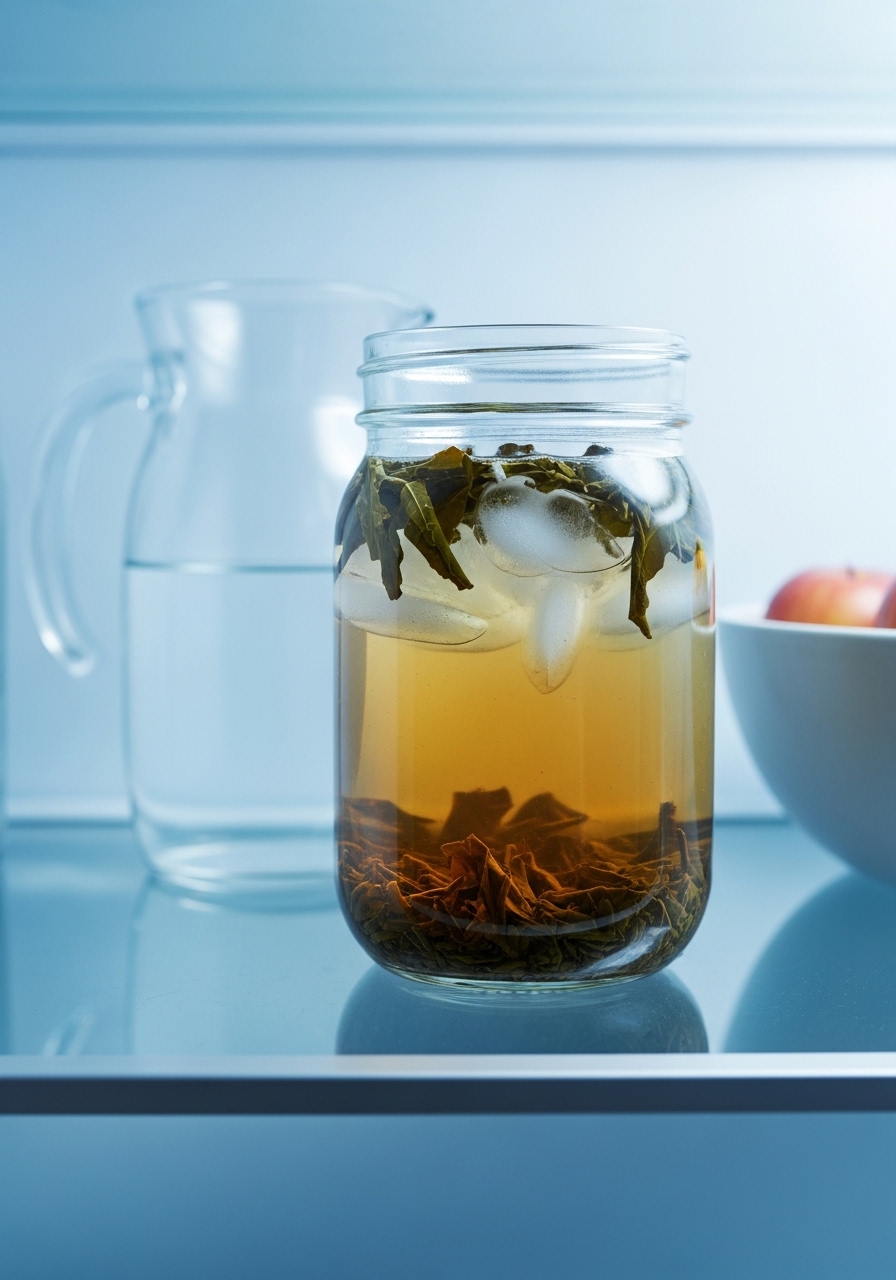
I discovered cold-brewed tea by accident. Left a jar of green tea leaves in water in the fridge overnight — forgot I’d put it there — and the next day tried it before pouring it out. It was the smoothest, sweetest green tea I’d ever tasted, with none of the bitterness I usually fought with. That was three summers ago, and I’ve cold-brewed more tea than I’ve hot-brewed since May through September every year.
Yes, tea absolutely steeps in cold water. The process is different from hot brewing — slower, gentler, and it produces a fundamentally different cup. Here’s everything I’ve learned about making it work well.
How Cold Brewing Works (and Why It Tastes Different)
When you steep tea in hot water, heat acts as an accelerant — it rapidly extracts caffeine, catechins, tannins, amino acids, and aromatic compounds all at once. This gives you a complex, bold cup, but also extracts the bitter and astringent tannins that make over-steeped tea unpleasant.
Cold water extracts compounds much more selectively. The amino acids (particularly L-theanine, which gives tea its sweet, savory quality) and lighter aromatic compounds dissolve readily in cold water. The heavier tannins and much of the caffeine extract far more slowly. The result:
- Naturally sweeter — more L-theanine relative to tannins
- Less bitter and astringent — tannin extraction reduced by roughly 50-70%
- Lower caffeine — typically 30-50% less than hot-brewed
- Smoother mouthfeel — no harsh edges
- More forgiving — nearly impossible to over-steep and ruin it
The trade-off is time. What takes 3-5 minutes with hot water takes 6-12 hours in cold water. But since it’s completely hands-off — you just put it in the fridge and walk away — the actual effort is minimal.
Which Teas Work Best
Green tea is the undisputed champion of cold brewing. It’s the tea that benefits most from the reduced tannin extraction — many people who think they don’t like green tea actually just don’t like over-steeped, bitter green tea. Cold-brewed green tea is sweet, smooth, and refreshing. Japanese greens (sencha, gyokuro) are particularly exceptional cold-brewed.
White tea cold-brews beautifully. Silver needle and white peony produce a delicate, naturally sweet brew with floral notes that get lost in hot water. Steep for 8-12 hours.
Oolong tea works well, especially lighter oolongs. A cold-brewed oolong has a lovely floral, creamy quality. Darker roasted oolongs don’t cold-brew as impressively — they need heat to release their toasty flavors.
Black tea is the trickiest. It works, but the result is very different from hot-brewed black tea — milder, less malty, with more stone-fruit notes. If you want a strong iced black tea that tastes like traditional iced tea, you’re better off hot-brewing it double-strength and pouring over ice. For a lighter, smoother iced drink, cold brewing is worth trying.
Herbal teas are hit or miss. Fruit-based herbals cold-brew well. Chamomile needs heat to release its essential oils effectively. Peppermint cold-brews decently but takes longer (12+ hours).
My Method (and Exact Ratios)
After a lot of experimenting, here’s what works consistently:
The ratio: 1.5x the amount of tea you’d use for hot brewing. So if you normally use 1 teaspoon per cup, use 1.5 teaspoons for cold brew. Cold water extracts less, so you need more leaf to compensate.
The setup:
- Add loose tea leaves to a jar, pitcher, or bottle with a filter. I use a 1-liter glass pitcher with a built-in infuser.
- Fill with cold filtered water. Tap water works but filtered tastes cleaner.
- Put it in the refrigerator. Not the counter — the consistent cold temperature of the fridge produces the best results.
- Wait.
Steep times by tea type:
- Green tea: 6-8 hours (overnight is perfect)
- White tea: 8-12 hours
- Oolong: 8-10 hours
- Black tea: 8-12 hours
- Herbal: 12+ hours
When it’s done: Strain out the leaves. Unlike hot tea, the flavor won’t get harsh if you leave the leaves in a bit longer — but for the best flavor, strain when the color looks right. The finished tea keeps in the fridge for 2-3 days, though it’s best within 24 hours.

Tips I’ve Picked Up
Prep a batch Sunday night. I make a full liter of cold-brewed green tea every Sunday evening. It’s my go-to drink Monday through Wednesday. Cheaper and better-tasting than any bottled tea.
Add fruit after steeping, not during. If you want fruit-infused cold tea, brew the tea plain first, then add sliced fruit (peach, strawberry, lemon) to the strained tea. Adding fruit during steeping can interfere with extraction and introduce unwanted flavors.
Try it with sparkling water. Strain out the tea leaves, then top with sparkling water instead of drinking it straight. It makes a sophisticated, zero-calorie sparkling tea that’s way more interesting than soda.
Tea bags work too. Not everyone has loose-leaf tea. Tea bags cold-brew just fine — use 2 bags per liter and steep at the longer end of the time range. Quality loose leaf will always produce a better result, but cold brewing is forgiving enough that even basic tea bags make something enjoyable.
If you’re curious about tea’s caffeine effects but sensitive to it, cold brewing is worth trying. The lower caffeine extraction means you get the flavor and many of the health benefits with less of the stimulant effect. It’s become my standard recommendation for people who want to drink tea in the afternoon or evening without disrupting sleep.
FAQ
Does cold-brewed tea have less caffeine than hot-brewed?
Yes, typically 30-50% less. Cold water is much less efficient at extracting caffeine. The exact reduction depends on the tea type, amount used, and steeping time, but cold brew consistently delivers a lower-caffeine cup.
Can I cold-brew tea at room temperature instead of the fridge?
You can, and it’ll steep faster (4-6 hours for green tea). However, there’s a food safety concern — tea left at room temperature for extended periods can develop bacteria. The fridge is safer for long steeps. If you room-temp steep, drink it within a few hours.
Is cold-brewed tea as healthy as hot-brewed?
It retains most of the antioxidant benefits of hot-brewed tea, though some studies suggest slightly lower catechin extraction. The L-theanine content is comparable. Overall, the health difference is minimal — drink whichever way you enjoy more.
Why does my cold-brewed tea look cloudy?
Cloudiness happens when tea is cooled too quickly or when there’s a high mineral content in your water. It’s harmless and doesn’t affect taste. Using filtered water and cold-brewing directly (rather than cooling hot tea) usually prevents it.